Get Full Government Meeting Transcripts, Videos, & Alerts Forever!
Get email alerts on the Pavement Management topic
No spam. Unsubscribe anytime.
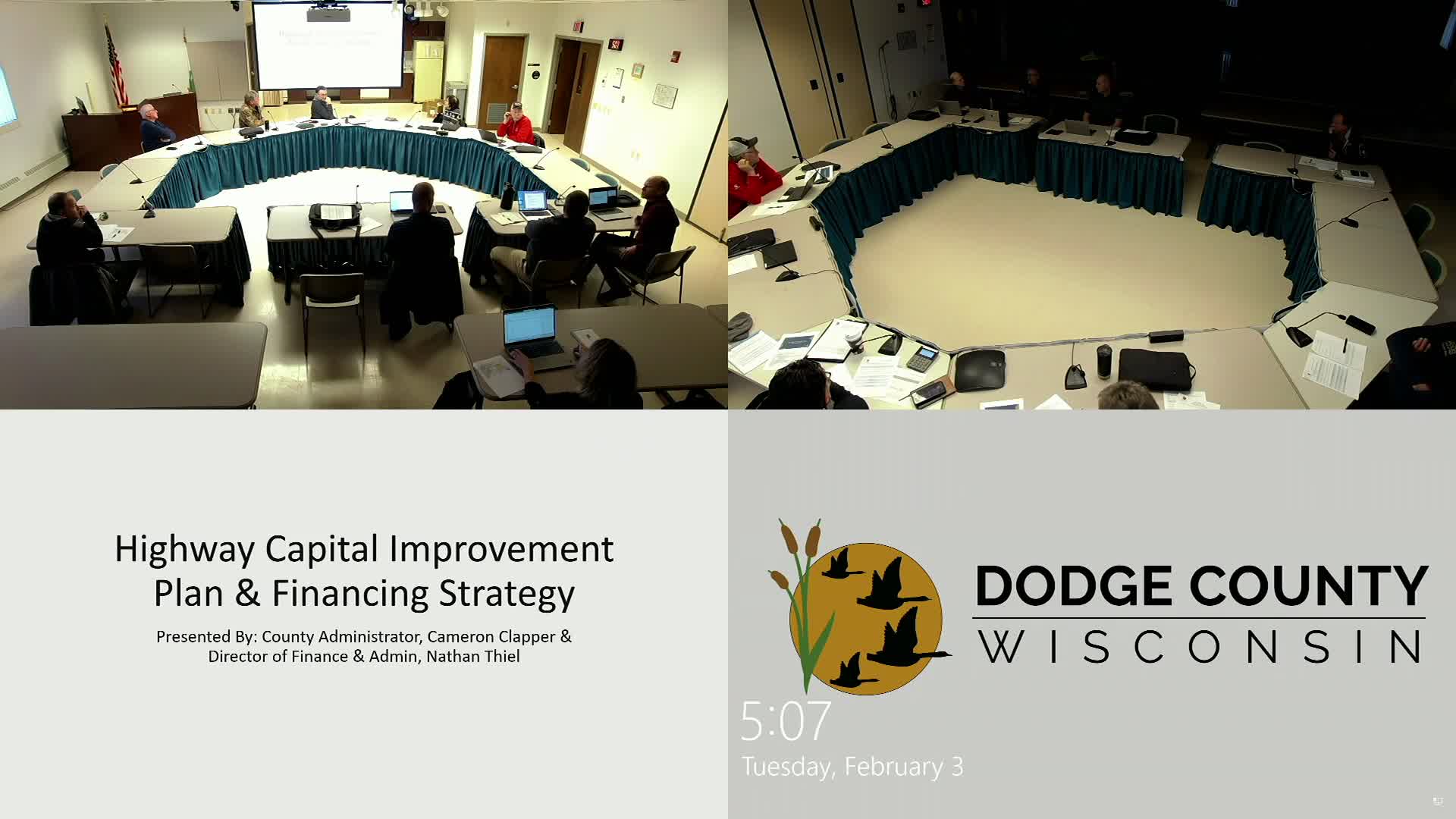
Dodge County review outlines PACER-based pavement strategy and financing options
Summary
Presenters showed PACER-based road-condition projections and argued that combining regular resurfacing with targeted mill-and-overlay and chip sealing could lower recurring costs; they recommended more data and financing analysis before changing the county's 22-mile program.
County highway staff and consultants presented a multi-decade pavement management approach that uses PACER condition ratings to time resurfacing, mill-and-overlay and chip-seal maintenance so the county can improve average road condition without unsustainable cost spikes.
Presenter S10 laid out cost estimates used in the analysis: roughly $450,000 per mile for a 4-inch resurfacing, about $200,000 per mile for a mill-and-overlay where the base is sufficient, and about $50,000 per mile for chip sealing. S10 and S6 argued that adding proactive chip sealing and targeted mill-and-overlay over a 25- to 75-year maintenance horizon could produce recurring cost savings compared with repeated full resurfacing, but they cautioned that many county roads currently lack the base conditions necessary to implement mill-and-overlay immediately.
The presenters offered a phased approach: maintain the current 22-mile minimum resurfacing program while exploring options to increase annual miles (to about 30) and consider an initial investment or borrowing strategy to "catch up" and then transition to a more proactive maintenance mix. S10 said a 10-year period of continued resurfacing could position the county to begin using mill-and-overlay more broadly afterward.
Supervisors focused on financing and implementation feasibility. Board members asked for: (1) PACER ratings update for 2025; (2) a breakdown of which roads already have base stabilization suitable for mill-and-overlay; (3) historical spending and what percentage of the county budget went to roads; and (4) concrete financing scenarios such as a debt-service levy or grant packaging. S10 and S6 agreed to return with those materials.
Why it matters: The county's highway network spans roughly 544 miles; staff said the 22-mile-per-year cycle is the current baseline but may be the "bare minimum" to maintain system condition. The discussion matters because choices about timing and technique (chip seal vs. mill-and-overlay vs. resurfacing) affect both short-term budgets and long-term costs.
Next steps: Staff will provide updated PACER ratings, a road-by-road base-condition summary, historical spending tables, and financing options for further discussion at the next meeting.