Get Full Government Meeting Transcripts, Videos, & Alerts Forever!
Get email alerts on the Water Supply topic
No spam. Unsubscribe anytime.
Washington launches "Water Future" initiative, pledges statewide roundtables and year-end recommendations
Summary
The Washington State Department of Ecology on Thursday launched "Washington's Water Future," a statewide initiative to convene regional roundtables this summer and produce recommendations by year-end to address recurring drought, declining snowpack and competing demands on water resources.
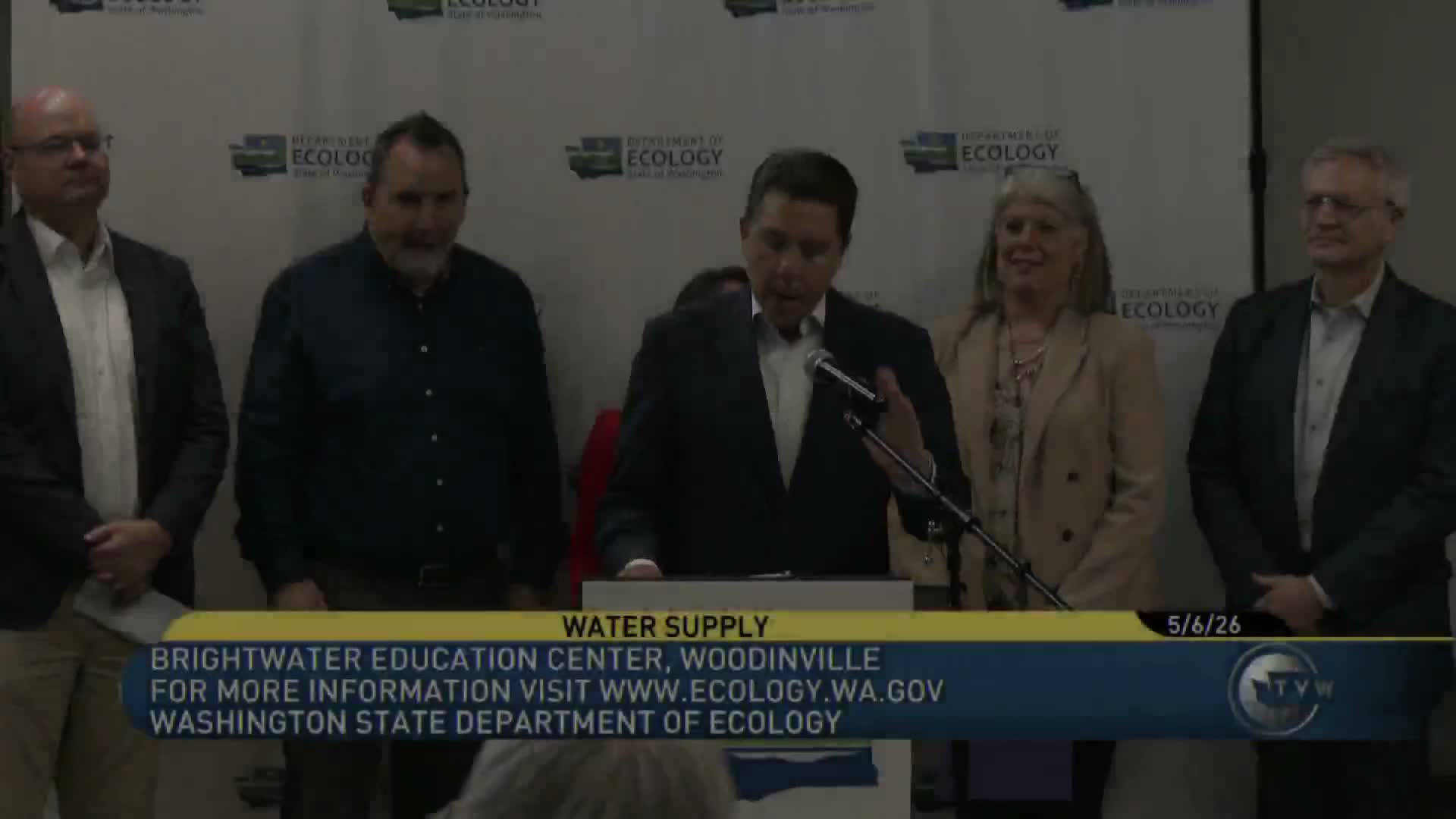
Casey Sixkiller, director of the Washington State Department of Ecology, opened a statewide launch of "Washington's Water Future," saying the initiative will convene regional roundtables this summer and bring recommendations to Governor Bob Ferguson by the end of the year. "Washington is a water state," Sixkiller said, framing the effort as a response to shifting snowpack and more frequent droughts.
In a prerecorded message, Governor Bob Ferguson called climate change "here" and noted the state recently declared a drought for the fourth consecutive year, urging a coordinated approach across local governments, tribes, agriculture and utilities. "We need secure water supplies so we can grow our economy, support our agriculture industry, protect only fish runs, and preserve tribal resources," Ferguson said in the video.
The launch gathered tribal leaders, county officials, municipal electeds and industry representatives to lay out local needs and potential solutions. Leonard Forsman, chairman of the Suquamish Tribe and president of the Affiliated Tribes of Northwest Indians, said low summer flows and higher temperatures are already harming salmon and hatchery operations and stressed that tribal fishing rights must be part of future water management. "Every part of the soil is sacred to my people," Forsman said, urging restoration, estuary protection and recognition of tribal water rights.
King County Councilmember Claudia Balducci described aging infrastructure and rising water, sewer and stormwater rates, and highlighted regional innovations at Brightwater, where the county is expanding recycled-water projects. Cameron Grove of King County's wastewater treatment division said Brightwater produces class A recycled water and distributes more than 50,000,000 gallons a year through a purple-pipe system for uses such as golf-course irrigation and parklands.
Smaller cities also outlined local approaches. Linden Mayor Scott Cortez described three steps Linden has taken to stretch limited supply: acquiring a former water-association well, recycling distilled process water from a dairy plant back into the river above the city's intake, and piloting managed aquifer recharge to store high flows for later use. John Devaney, president of the Washington State Tree Fruit Association, urged applying the Yakima Basin's long-running collaborative adjudication and integrated-planning model to other watersheds, noting recent climate-driven damage to irrigation infrastructure.
State Representative Divina Doerr said the legislature provided emergency drought funding in 2025 and has bills in play addressing small water systems, affordability and groundwater permitting; she offered the legislature's partnership for the roundtables. Sixkiller said Ecology will rely on partnerships and scientific analysis, citing projections that Puget Sound could see less than half its historical snowpack by 2080.
The department plans regional roundtables across the state this summer to surface locally tailored solutions, examine legal and financial barriers and identify investments and policy changes. Attendees were offered a tour of Brightwater and staff indicated follow-up meetings and written recommendations to the governor later this year.
The launch did not include formal votes or binding decisions; the initiative's next steps are the roundtables and a year-end report to the governor.