Get Full Government Meeting Transcripts, Videos, & Alerts Forever!
Get email alerts on the Personnel Evaluation topic
No spam. Unsubscribe anytime.
Falmouth committee questions evaluation guidance, raises transparency and weighting concerns
Summary
Committee members pressed for clearer summative‑evaluation rules after a presentation that described using a 'preponderance' (mode) to consolidate ratings and said prior 'needs improvement' ratings were absent; members objected to language allowing some members' evaluations to be 'weighted less.'
The Falmouth School Committee spent a major portion of its April 6 meeting pressing for clearer rules and greater transparency in the summative evaluation process for the superintendent.
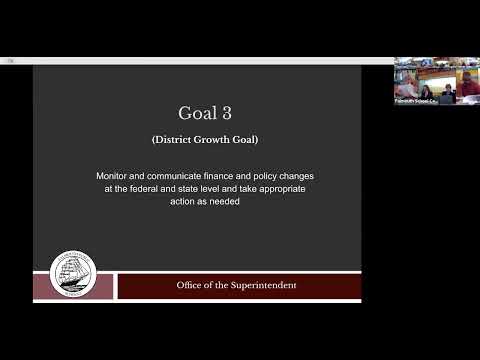
The superintendent presented progress on district goals and then walked members through the summative evaluation guidance, saying the final summative — due April 24 — would be created by consolidating individual committee members’ evaluations using a "preponderance" (defined in the materials as the mode) rather than a numerical average. The guidance, the presenter said, also requires any non‑proficient rating be accompanied by a written justification and noted there were no "needs improvement" ratings in 2025, which the presenter interpreted as meaning no "unsatisfactory" ratings could be given for 2025–26.
"Ratings in any and all categories…other than proficient must be accompanied and justified by a comment," the presenter said during the overview. The presenter also cited a DESI/MHCS guidance document as background for the process.
Committee members immediately raised concerns about internal contradictions and process clarity. One member asked whether references to "needs improvement" referred to individual indicator ratings or to the final summative document; another said the paragraph that lists conditions under which an "unsatisfactory" rating is appropriate seemed to conflict with a later note that no such ratings could be assigned this cycle.
"That phrase…could use some cleaning up in the language," a member said, urging clearer definitions of terms such as "performance is consistently below the standard." Another member who identified themself as serving on the evaluation subcommittee said the guidance provision that evaluations from members who "have not fully participated" would be "weighted less than other evaluations" was objectionable and could be applied subjectively. "I do not agree that my evaluation should be weighted any less than any other committee members," that member said.
The committee member who will tally the summative results also cautioned that the guidance leaves room for inconsistent application. "My concern is that it is very ambiguous and it is very subjective," the member said, adding that different committee members might provide different answers to the same question if contacted individually.
Several members asked whether the committee had previously voted to adopt this specific guidance; they were told the document had been used in prior years and that the evaluation subcommittee had not proposed changes last fall. Some members said they had not seen the version presented until days before the meeting and asked that the guidance be circulated earlier in the process.
Members asked for clarification and for supporting documentation to be made available to the full committee. The superintendent and others on the dais agreed to provide survey headings and to make the guidance document and related materials more accessible so members could review them before final scoring.
The committee did not take a final vote on the evaluation rules at the meeting; the discussion concluded with members agreeing to follow up and to seek clearer wording and process safeguards before the summative consolidation is completed.