Get Full Government Meeting Transcripts, Videos, & Alerts Forever!
Get email alerts on the Urban Forestry topic
No spam. Unsubscribe anytime.
Consultant presents four-part urban forestry plan; Oshkosh canopy roughly 16% and staffing, funding lag peers
Summary
Consultant Rich Hyer told the Oshkosh advisory parks board that the city’s public-tree inventory is about 10,250 trees, canopy is about 16% and the completed four-part plan recommends operations, staffing and community-engagement steps to boost canopy and resilience.
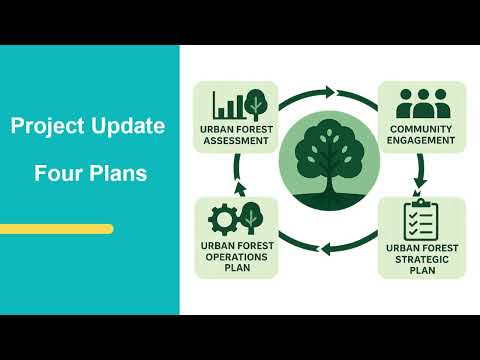
Rich Hyer, a consultant with Eocene, told the Oshkosh Advisory Parks Board on May 11 that his team completed four complementary documents — an urban forest assessment, a community engagement report, a strategic plan and an operations plan — to guide city forestry work.
Hyer said the city’s public‑tree inventory is approximately 10,250 trees and that roughly 75% or more of those trees are in good, very good or excellent condition. He reported an estimated citywide tree canopy of about 16% (plus or minus roughly a percentage point) and noted that Wisconsin averages cited in prior U.S. Forest Service work are near 30–33%.
“We put the assessment together so you have a baseline snapshot of where you are at any one time,” Hyer said. He warned that species imbalance — “we have a lot of maples” — can leave the urban forest vulnerable to pests and disease and recommended planting diversity targets and an operations plan to guide routine maintenance.
Hyer described the operations plan as a tool to organize current work, not replace it, and urged annual review and updating rather than waiting a decade between revisions. He recommended a 4–5 year pruning cycle as optimal; Oshkosh is generally meeting that standard with about a five‑year cycle, he said.
Hyer also compared staffing and budgets to peers: he said an FTE benchmark of about 6.3 for comparable communities would be desirable and that Oshkosh’s per‑capita forestry spending was under about $10 versus roughly $15 among Midwest peers. “You have dedicated funding, but relative to peers you’re below average,” he said.
Travis Dirks, who led local forestry work, clarified operational responsibilities: the city maintains trees on public property; private property owners are responsible for pruning branches that overhang sidewalks or roadways. Dirks and Hyer said the city sends notices for nonhazardous issues and uses SeeClickFix, phone calls and emails to triage public requests.
Board members pressed Hyer on data points and final status of the plans. Hyer said the plans are complete, welcomed any final comments and confirmed he would not bill the city until it approves the final versions. He acknowledged a spreadsheet error in one frequency chart raised during the meeting and said he would provide corrected figures and supporting files before the meeting adjourned.
The presentation included outreach findings: survey respondents generally value canopy and many residents expressed interest in incentives or vouchers to encourage private property tree plantings. Hyer noted examples from other communities and said vouchers or grant-supported incentives could be considered.
The board did not take formal action on the plans at the meeting; Hyer said next steps are for board and staff review and prioritization of the plans’ goals and objectives for budgeting and implementation.