Get Full Government Meeting Transcripts, Videos, & Alerts Forever!
Get email alerts on the Liability Reform topic
No spam. Unsubscribe anytime.
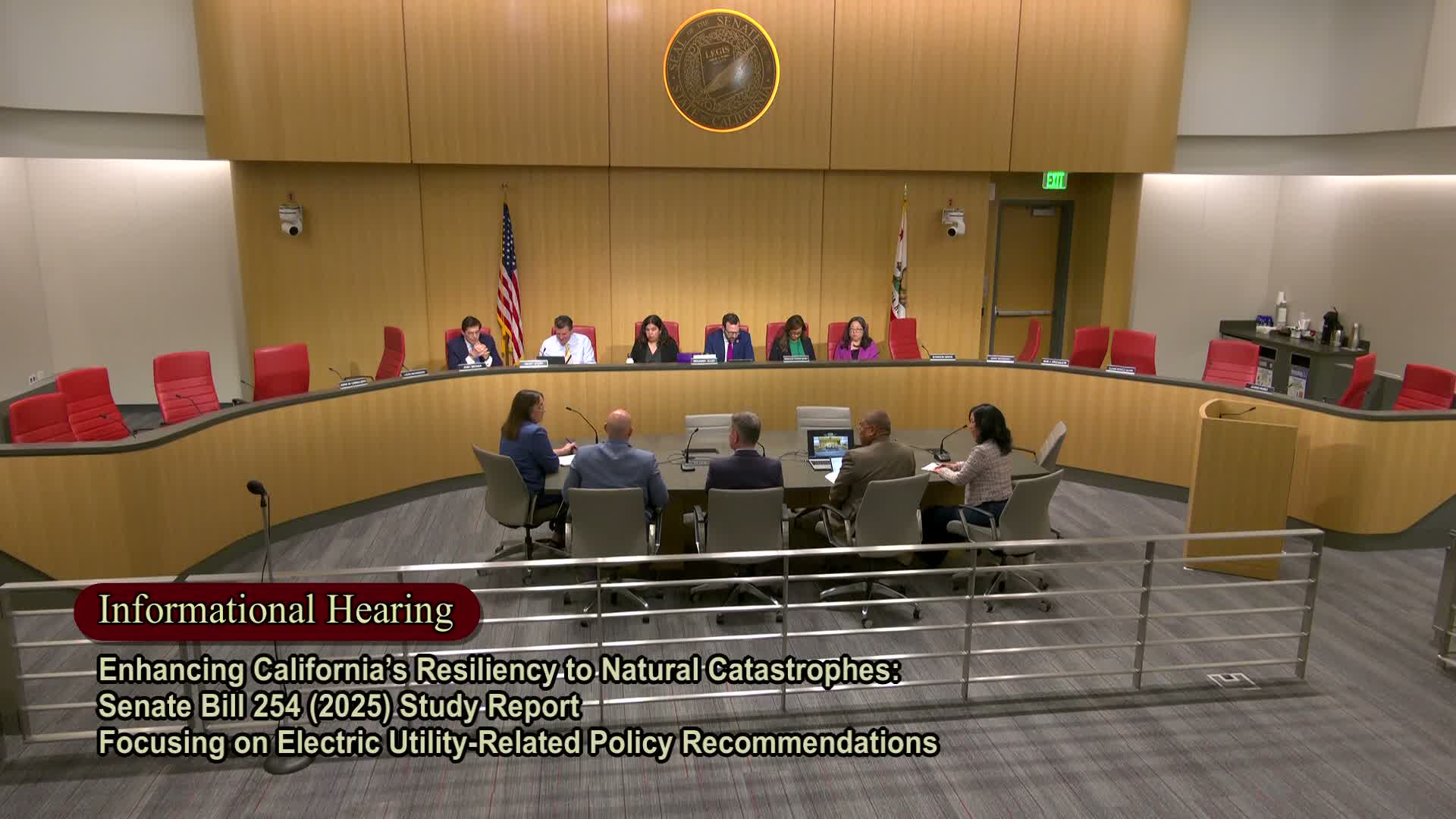
Lawmakers and stakeholders split over liability reforms as wildfire fund options are debated
Summary
The SB 254 hearing surfaced a sharp split: utilities and municipal utilities seek liability certainty or state backstops to protect finances and mitigation investments; survivors, consumer groups and many cities oppose weakening inverse condemnation or capping damages, citing accountability and survivor restitution.
A central fault line at the Senate hearing on the SB 254 report was whether to revise California's liability framework for utility-caused wildfires.
Advocates for liability reform — including municipal utilities and some utility-aligned witnesses — argued that California's unique exposure to inverse condemnation (strict liability for property damage regardless of negligence) creates uncapped fiscal risk that can impair municipal finances and deter investment in resilience. Fernando Valero of LADWP and the California Municipal Utilities Association urged reforms defining fault and setting reasonable standards of care so capital markets can price exposure and municipal governments and public utilities are not imperiled.
CEA and Aon modeled liability-reform scenarios that would lower capital needs and monthly household cost translations. Andy Neal said certain liability reforms could reduce a modeled capital need from about $36 billion to roughly $29 billion.
Opponents warned that limiting damages, capping recoveries, or eliminating inverse condemnation would sideline victims and weaken incentives for safety. Joy Chen and other survivor representatives argued accountability must remain intact: "Corporations that repeatedly cause catastrophic harm should be held accountable," Chen said. The League of California Cities, consumer advocates and many senators stressed that weakening liability would shift losses to survivors, local governments and taxpayers.
Panelists discussed intermediate steps such as targeted reforms to subrogation, narrowing specific damage categories, or designing a state backstop that limits very large losses while preserving negligence-based recovery. Legal changes to inverse condemnation would require a constitutional amendment, a high political and procedural bar, which lawmakers and witnesses acknowledged.
The committee did not resolve the legal question. Senators asked agencies to return with more analysis of legal pathways, equity impacts, and the trade-offs between liability certainty and survivor protections before moving forward with any statutory or constitutional changes.