Get Full Government Meeting Transcripts, Videos, & Alerts Forever!
Get email alerts on the Special Education topic
No spam. Unsubscribe anytime.
Arlington SEAC reports transition-focused work, pilot tools to ease special-education moves
Summary
The district's Special Education Advisory Committee reported expanded transition work—preschool-to-elementary through post-high-school supports—piloted family resources and an "all-about-me" student form, and highlighted fewer students served after MTSS efforts, program growth and plans for consistent protocols next year.
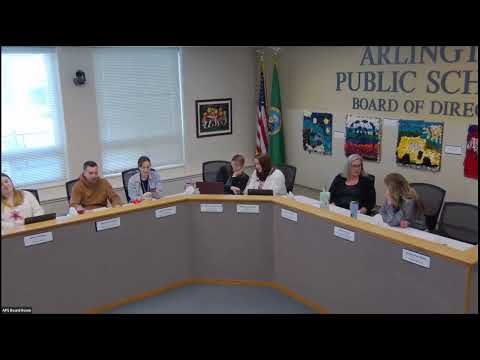
The Arlington School District's Special Education Advisory Committee (SEAC) gave the board an annual update outlining work to smooth transitions for students with disabilities and expand consistent programming across grade levels.
Brenda Wyman and Carrie Hockston, SEAC organizers, said the committee narrowed a long list of priorities this year to focus on transition planning: moving students from preschool into elementary school, from fifth grade to middle school, and from school into adult services. "We started small work groups and used a family survey to prioritize transition, visitation and an 'all-about-me' form to capture student voice and needs," one presenter said during the report. SEAC members said they piloted visitations, sensory-friendly events and a parent resource pamphlet to demystify acronyms and services.
Presenters said the district has seen a modest drop in the number of students served in special education, which they attributed in part to districtwide MTSS (multi-tiered system of supports) efforts to provide earlier interventions in general education. The committee described program numbers: SLE (specialized learning environment) classrooms across elementary and middle schools, life-skills classrooms at multiple levels, behavior programs and a transitions program that places students at community job sites and practices adult life skills.
Teachers and support staff described classroom-level innovations: a handwriting unit for preschoolers, job-coach pairings that send students to community sites, and routines that let many SLE students participate with general-education peers for part of the day. Rebecca Suday, a life-skills teacher, noted students in her class have taken part in career fairs and community outings and are practicing communication skills such as signing and using AAC devices.
Looking ahead, SEAC plans to increase student representation on the committee, expand the high-school SLE model so students experience continuity from elementary through high school, deploy consistent curriculum and protocol booklets across self-contained programs, and bring case managers together for an IEP refresher in August. The group also flagged technical assistance work around specific learning disability professional development to be phased in through 2028.
Board members praised the committee for its student voices and family-centered materials. The district superintendent and board chair both thanked staff and families for building new supports that SEAC members said will continue to be refined next year.