Get Full Government Meeting Transcripts, Videos, & Alerts Forever!
Get email alerts on the Campaign Finance topic
No spam. Unsubscribe anytime.
Senate approves campaign‑finance changes including four‑second ad disclosure and address‑redaction rules
Summary
House File 4239 passed May 13, 2026 with provisions adding a four‑second advertiser disclosure requirement, a $10,000 combined cap for certain security and structural expenses, restricted access to candidate street addresses (30‑day deletion for caucus leaders), and authority for the Campaign Finance Board chair to dismiss frivolous complaints.
The Minnesota Senate on May 13, 2026 adopted amendments to House File 4239 and passed the bill on final passage, advancing several changes to campaign‑finance administration and political‑advertising disclosures.
Sponsor Senator Westland described the amended bill as the product of bipartisan and bicameral negotiations, saying it aligns Senate language with the House and incorporates Campaign Finance Board recommendations. Key changes described on the floor included a requirement that some audio/visual political advertisements carry a four‑second disclosure; a combined $10,000 cap that candidates may use for structural improvements and security services as non‑campaign disbursements; new limits on public access to candidate street addresses in campaign reports coupled with a provision allowing caucus leaders limited access for official purposes with a required deletion within 30 days; and authority for the Campaign Finance Board chair to dismiss frivolous complaints.
Senator Abler asked for clarification about the four‑second disclosure, noting practical concerns for short social‑media ads and candidate cards. Senator Westland responded that the language arose from a court case, was developed with the Campaign Finance Board’s input, clarifies an earlier ambiguity, and has an immediate effective date. "This now sets a standard as a response to a court case," the sponsor said on the floor.
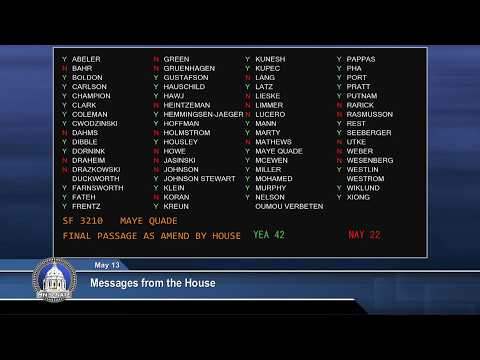
The A‑5 amendment that contains these changes was adopted and the bill passed final passage by recorded vote (46 ayes, 21 nays). The sponsor said the changes are intended to balance transparency, privacy, and election‑security concerns; the floor record shows proponents emphasizing clarity for administrators and practical safeguards for candidates and staff.
Next steps include enrollment and any administrative guidance the Campaign Finance Board issues to implement the new disclosure standard and address‑access procedures. The transcript does not include text of the enrolled bill or the Campaign Finance Board’s formal guidance; reporters and stakeholders should consult the enrolled legislation and the Campaign Finance Board for definitive, operative language.