Get Full Government Meeting Transcripts, Videos, & Alerts Forever!
Get email alerts on the Tribal Suicide Prevention topic
No spam. Unsubscribe anytime.
Tribal leaders urge dedicated funding and culturally grounded suicide prevention for California Indian communities
Summary
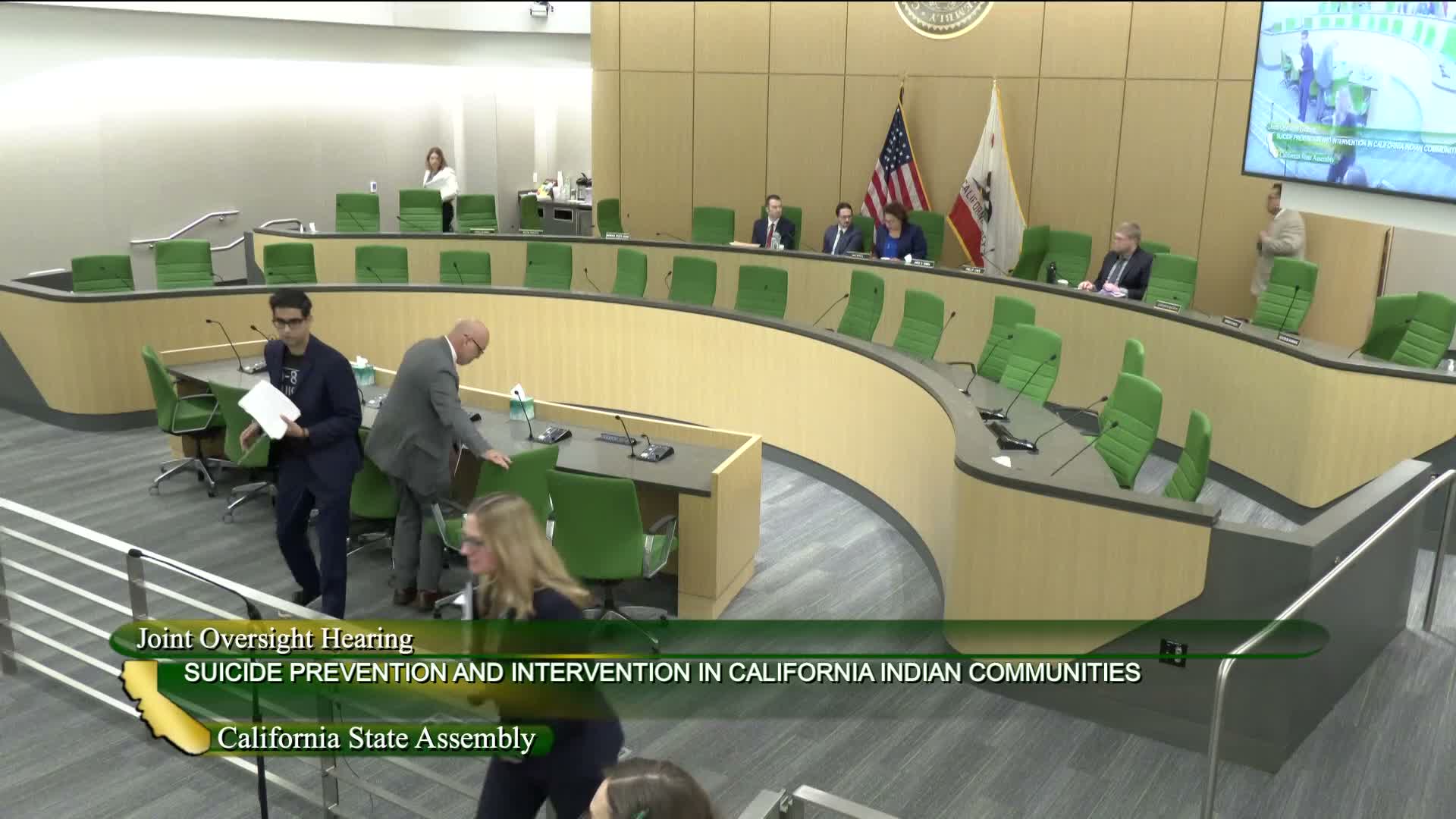
Tribal leaders at a joint Assembly hearing described disproportionate suicide rates among Native youth and urged the state to fund culturally grounded prevention, create tribal 988 pathways, and set a permanent tribal funding set‑aside.
Tribal leaders, health directors and community advocates urged California lawmakers to pair technical 988 implementation with sustained, culturally grounded investments to address persistently high suicide rates among American Indian and Alaska Native people in the state.
Joe James, chairman of the Yurok Tribe, recounted recent local losses and said his community is both geographically isolated and in urgent need of sustained prevention and crisis resources. “Resources, funding, partnership is critical for us,” he said, describing a prior tribal state of emergency and local investments supported by a BCHIP grant.
Erica Pinto, chairwoman of the Hámul Indian Village, framed suicide prevention as inseparable from historical trauma and cultural loss, and urged investments that restore identity and belonging through language, ceremony, mentoring and youth engagement. “Prevention also means restoring identity and belonging,” she said.
Several speakers urged the Legislature to create a permanent tribal set‑aside for behavioral health prevention funding. Virginia Hedrick, CEO of the California Rural Indian Health Board, recommended a minimum 5 percent protected tribal set‑aside and proposed exploring a tribal 988 pathway (a press‑4 or similar option) so Native callers could route to culturally informed crisis responders and tribal systems.
Witnesses described small but important state supports: the Department of Public Health’s Office of Suicide Prevention awarded $1.4 million across three tribal grantees (funded at $160,000 per grantee per year for three years) and distributed lockboxes and other lethal‑means safety materials to tribal programs. Ashley Mills of the California Department of Public Health emphasized the Office’s recent investments, the Never a Bother youth campaign adaptations for Native youth, and upcoming Behavioral Health Services Act prevention campaigns that will fund tribes and community organizations.
Tribal speakers emphasized that modest grants are insufficient to change systems at scale. Panelists urged streamlined funding paths that allow tribal nations and tribal health programs to apply directly and to manage culturally anchored services rather than routing large state awards through non‑tribal contractors.
Ending: Lawmakers acknowledged the testimony and signaled interest in pursuing tribal set‑asides, greater tribal involvement in design and governance, and additional coordination between state agencies and tribal partners. Committee members asked agencies to report back with options for protected funding and mechanisms to ensure tribal grantees can scale promising community models.