Get Full Government Meeting Transcripts, Videos, & Alerts Forever!
Get email alerts on the Ab 988 Implementation topic
No spam. Unsubscribe anytime.
Lawmakers and providers say California’s 988 crisis network is underfunded and unevenly integrated
Summary
At a joint Assembly oversight hearing, the author of AB 988 and crisis‑center operators testified that California’s 988 system has expanded demand but not the funding, leaving text/chat answer rates far lower than phones and interoperability with mobile crisis teams incomplete.
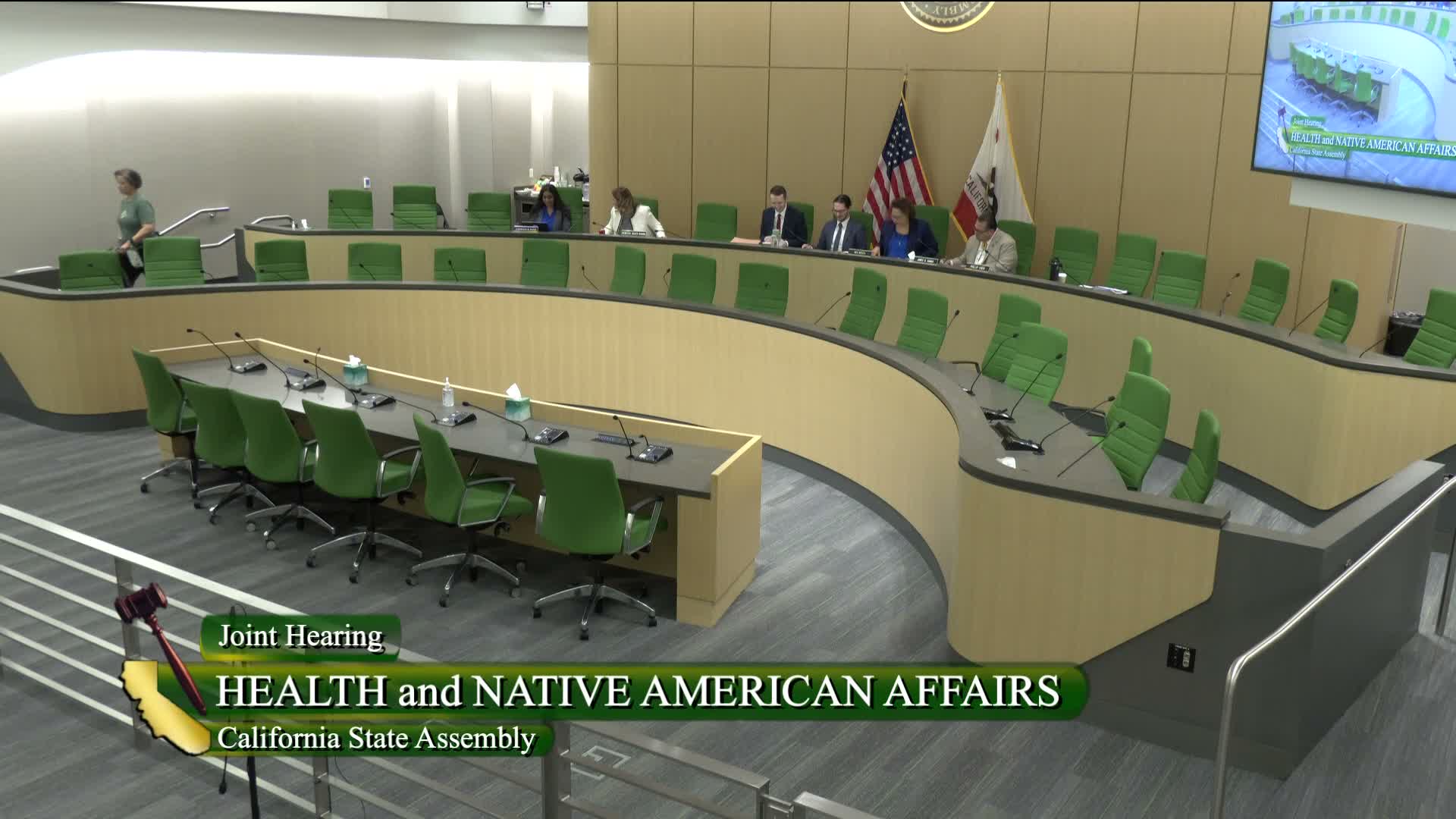
Assemblymember Bauer Kehan, the original author of AB 988, and crisis‑center operators told a joint Assembly Health and Select Committee on Native American Affairs oversight hearing that the state’s 988 crisis system has not matched resources to demand.
In the most direct account, Assemblymember Bauer Kehan said AB 988 was designed to give “someone to call, someone to come, and somewhere to go.” She urged the committee to use the outcomes review to identify why interoperability and mobile crisis linkages remain incomplete and to press for funding that aligns with the law’s vision.
The hearing’s lead provider witnesses cautioned that demand has outpaced funding. Tara Gamboa Eastman, director of government affairs for the Steinberg Institute, said California’s in‑state answer rate for phone contacts is roughly 85 percent but that text and chat answer rates remain near 40 percent, leaving many young and LGBTQ+ callers routed out of state and without local knowledge. “At a time when we should be expanding capacity, California is instead losing it,” she said.
Dr. Jonathan Porteous, CEO of WellSpace Health, described operational data from his statewide network and urged a substantially larger investment. WellSpace managed more than 100,009 988 crisis encounters in 2025 and resolves roughly 95 percent of encounters virtually, he said; providers’ collective estimate of needed local assistance funding is about $105 million, compared with roughly $32 million proposed in the governor’s budget.
Panelists stressed that 988 (the call/text/chat lifeline) and mobile crisis response are distinct but complementary pieces of the continuum. Several witnesses and county officials described local models where 988 counselors perform a warm handoff to a county mobile crisis line, producing faster, clinically informed field responses. Genevieve Valentine, San Joaquin County health care services director, said her county’s integration allowed direct referral and improved outcomes: roughly 250 mobile crisis calls per month and a recent quarter with just 14 percent ending in involuntary psychiatric holds.
But witnesses told members those local successes are uneven. Nargis Sohori Dillon of the 988 California consortium said contact volume had risen more than 37 percent for calls and 26 percent for text/chat year‑over‑year, and that the current funding method (based on historical call volumes) does not reflect how people now access crisis services. She said centers projected a $73 million gap between the governor’s proposal and the consortium’s needs.
Members focused significant questioning on interoperability and governance: who is responsible for delivering the technology that reliably transfers 911 calls and metadata to 988 centers, how the California Office of Emergency Services (Cal OES) pilot work will scale across all centers, and why a pilot system that exists in one call center is not yet broadly available. Steve Yarbrough of Cal OES said technical capability to transfer between 911 and 988 has been validated in lab tests and at a pilot center, but called for more consistent operational protocols statewide.
State officials outlined short‑ and medium‑term actions. Ivan Bhardwaj of the Department of Health Care Services said DHCS is developing trailer‑bill language to establish a designation process for California 988 centers (a proposed rulemaking window starting October 1, 2027, and a requirement that existing centers obtain designation by December 31, 2029). CalHHS noted outreach, training, and a five‑year implementation plan but acknowledged the plan’s early high‑level framing must be followed by technical steps to fund staffing and link mobile crisis services reliably.
What happens next: the committee signaled plans for continued oversight and follow‑up with state agencies. DHCS and CalHHS have pending budget change proposals and draft trailer bill language that, if enacted, would set standards for center designation and could reshape how the 988 fund is allocated. Committee members urged multi‑year funding road maps and earlier operational involvement of frontline providers when budget or technology changes are contemplated.
Ending: The oversight hearing concluded with lawmakers pressing agencies to translate the 5‑year plan into concrete, fundable steps so 988 centers can hire, train and operate at scale and so mobile crisis teams can be meaningfully and measurably connected to the statewide lifeline.