Get Full Government Meeting Transcripts, Videos, & Alerts Forever!
Get email alerts on the Roads Pavement topic
No spam. Unsubscribe anytime.
Residents urge Cole County to replace planned chip‑and‑seal on Atelier Drive with asphalt
Summary
At a May 5 Cole County Commission meeting, resident Derek Miles and neighbors opposed a planned chip‑and‑seal treatment for Atelier Drive, arguing 26 years without preservation and visible fatigue cracking warrant an asphalt overlay; county road staff said chip‑seal is a lower‑cost preservation strategy and the item will go to the road board for further review.
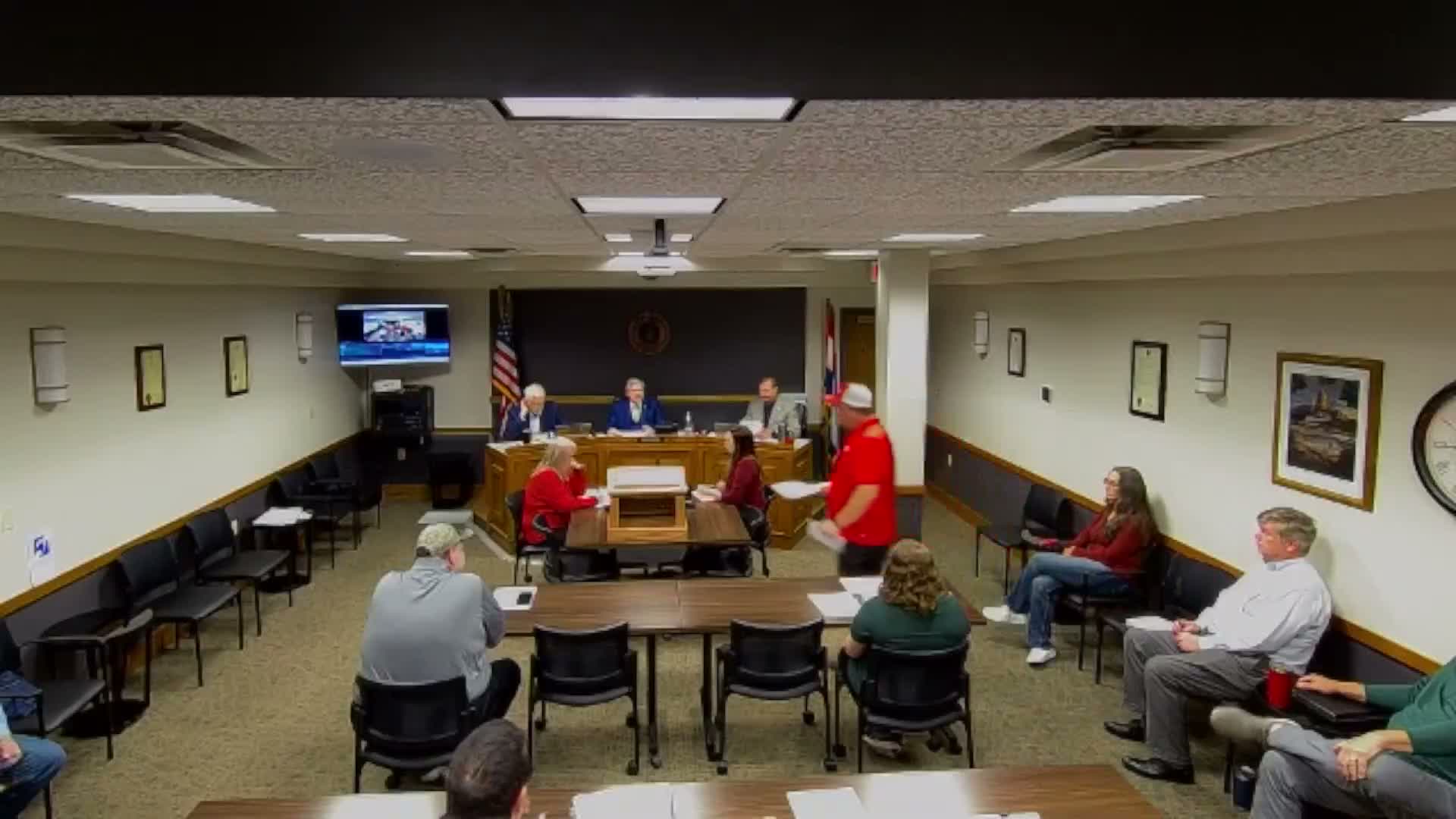
Derek Miles, a Beverly Hills Subdivision resident, told commissioners May 5 that his neighborhood was slated for a chip‑and‑seal treatment and asked the county to reconsider and overlay Atelier Drive with asphalt instead. "I'd rather do nothing than to put a chip and seal down," Miles said, citing photos he submitted showing "alligator" or fatigue cracking and arguing a chip treatment could harm property values.
A second resident who said he paid to build the road in 2000 stressed that the pavement had received no preservation treatments for about 26 years and questioned whether the PASER visual rating system the county uses captures pavement age and base condition.
Road and Bridge staff responded that the PASER system is a condition‑based, visual rating and that chip‑seal is a proven, lower‑cost surface‑preservation method used to extend pavement life across a large network. "Chip seal is a good product and it will last," one staff presenter said, adding that rising asphalt prices mean overlays can quickly outpace the department's available funds. Staff said grouping nearby roads for chip‑seal contracts improves pricing and that some sections with severe base failure still require dig‑out repairs or overlays, which the county will address case by case.
Commissioners and staff agreed to place the specific request for Atelier Drive before the road/bridges committee for further review, allowing engineers and committee members to examine the PASER score, photo evidence residents provided, and options for preservation versus rehabilitation. No policy change or immediate override of the road program was enacted at the meeting.
Why it matters: The dispute highlights tradeoffs countywide between lower‑cost preservation techniques that stretch limited budgets and neighborhood expectations for asphalt overlays, especially on subdivision streets with long intervals since prior treatment. County staff emphasized the program seeks to improve the overall network condition while balancing costs.
What happens next: Staff will present the Atelier Drive materials and resident documentation to the road committee for a more detailed treatment recommendation and timeline.