Get Full Government Meeting Transcripts, Videos, & Alerts Forever!
Get email alerts on the Special Education topic
No spam. Unsubscribe anytime.
RSU 22 budget committee proposes elimination of 11 special-education positions, directors say services will be preserved
Summary
The RSU 22 budget committee on April 7 proposed removing 11 budgeted special-education positions (nine educational technicians, one BCBA and one high-school special-education teacher) and reallocating a 50% social-worker line; district leaders said federal grants and contracted services will cover needs and emphasized professional development and transition planning.
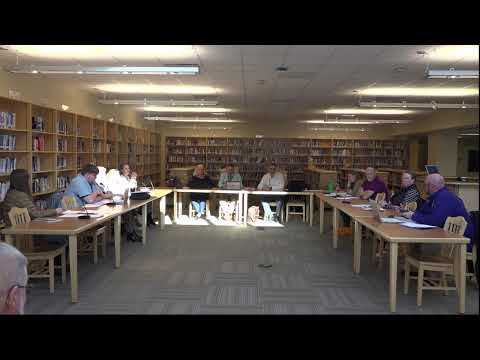
RSU 22’s budget committee on April 7 heard district staff outline proposed changes to Article 2 — the special-education portion of the school budget — including the elimination of 11 budgeted positions and a reallocation of one social-worker line.
Mr. Raymond, who presented the article to the committee, said the staffing reductions listed in the proposed budget include nine educational technicians, one board-certified behavioral analyst (BCBA) position that was already vacant this year and will instead be filled through contracted services, and one special-education teacher position tied to the high school. He said the nine educational-technician budget lines have not been filled for some time and that no current employee will lose a job because these are unfilled or vacated positions.
Christy, the district’s director of special services, told the committee the district remains bound by federal special-education rules — the Individuals with Disabilities Education Act (IDEA) and Section 504 — and said RSU 22 received $642,300 in federal IDEA entitlement funding for FY26. Christy said RSU 22 currently serves about 477 students under IDEA and 178 students under Section 504 and that federal funding covers a smaller share of total special-education costs than intended: “Originally IDEA was intended for the federal government to cover approximately 40% of the cost of special education. That is not occurring … we receive about 12%,” she said.
Christy argued the district can meet student needs without filling every vacant ed-tech position by investing in professional development for remaining staff, strengthening collaborative practices among teachers and related-service providers, and refining transition programming for high-school students — including individualized transition plans that can extend services through the day a student turns 22. She said the district will also bring four-year-old special-education programming next year (funded separately through the main department of education), and that in FY28 the district will begin responsibility for three-year-old child-find and special-education services as state funding and timelines shift.
Several committee members pressed staff on service continuity and contingency planning. Christy said staffing decisions were made in consultation with building administrators and emphasized the district’s ability to reassign contracted services where required. Mr. Raymond noted a contingency fund is available if unanticipated staffing needs materialize over the summer.
A parent who spoke during the meeting urged clearer community communications about the changes and suggested an infographic that explains what special-education services are provided and how different funding lines interact with the budget. Mr. Raymond said the district will update figures after a recent insurance-rate notice reduced projected Article 2 costs by about $100,000 — bringing the working Article 2 total to roughly $8,750,000 in the materials presented to the committee.
The committee did not vote on Article 2 at the meeting; staff said they will incorporate the insurance-rate adjustment and return to the committee as the budget is finalized before the district’s board workshop in May.