Get Full Government Meeting Transcripts, Videos, & Alerts Forever!
Get email alerts on the Budget Personnel topic
No spam. Unsubscribe anytime.
RSU 22 budget review highlights four teacher eliminations and a funded shift for intervention services
Summary
At an April 14 RSU 22 meeting, administrators outlined a largely flat Article 1 instruction budget while proposing four classroom-teacher eliminations tied to enrollment and shifting one title-funded interventionist to local funding to meet federal match requirements; officials said students' services would be preserved and class sizes would tick up modestly.
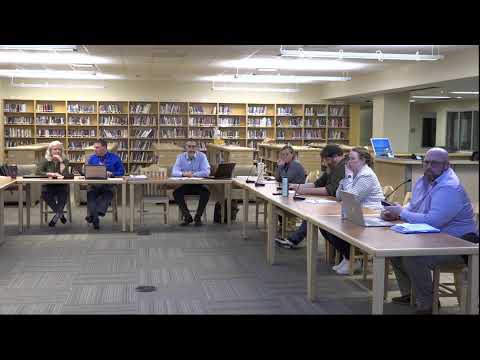
RSU 22 administrators presented the district's FY26 Article 1 (regular instruction) budget on April 14 and outlined personnel changes driven by declining enrollment and accounting realignments.
Nick, a district staff member who led the discussion, told the board the district would eliminate four classroom-teacher positions (social studies, English, one middle-school teacher at Reedsbrook and one kindergarten teacher at Smith School) and would shift one existing title-funded interventionist to the local budget to comply with matching rules. "We are simply taking a current title-funded individual and shifting it over to the local fund," Nick said, calling the move the final step in a two-year compliance plan.
Why it matters: staff said the interventionist-line increase (recorded as roughly a $400,000'$500,000 shift in coding) largely reflects recategorization of existing personnel rather than net new hires, but that one locally funded interventionist will now appear on the local budget. Administrators said this coding correction preserves access to federal Title funds; Nick warned that, "If we do not do that then we do not get the full amount of title funds." The district also said ED 279 reimbursement for some GT (gifted-and-talented) expenses will appear two years after spending, so some costs are recovered later.
Principals and program directors described how schools would absorb the reductions and preserve core services. Dr. Thibodeau, Hampden Academy principal, said in departments losing staff the average class size would move by about one to two students ("Average class size next year, 15," he said for one department) and described the changes as manageable given enrollment declines. Dorothy Dawson, teaching director for Gifted and Talented Services, said the GT discretionary budget is essentially level and serves about 5% of students; she noted program constraints under Chapter 104 and that much GT cost is for specialized supplies, contracted services and online subscriptions.
Board members pressed for clarity on items that appeared as zeros in prior years; staff said past audits showed expenditures that had been posted to the wrong lines and that this year's budget "right-sizes" individual school codes. One board member asked whether per-school non-cap custodial or furniture allocations should vary by enrollment or building age; staff agreed to explore proportional allocations but noted constraints in moving funds between articles without court approval.
Financial context: administrators characterized Article 1 as effectively flat overall (a roughly 2.7% increase in instruction largely driven by payroll and benefits tied to collective-bargaining), and a board member pointed to an approximately $6. something million fund balance as evidence the district is not overspending. Nick said revised summary sheets and corrected account numbers will be circulated before the April 30 meeting.
Next steps: the board did not take formal votes on personnel at this meeting. Members scheduled follow-up review for April 30, including revised article summaries and a mill-rate presentation for public education on how local taxes are affected by state calculations.