Get Full Government Meeting Transcripts, Videos, & Alerts Forever!
Get email alerts on the Public Safety 287g topic
No spam. Unsubscribe anytime.
Sheriff briefs board on limited 287(g) warrant‑service model as legal questions persist
Summary
Kandiyohi County Sheriff Eric Tollefson outlined a narrow, jail‑based 287(g) warrant‑service officer model intended to allow trained correctional staff to serve federal detainers inside the jail. He said training has not yet been offered and Minnesota attorney general opinions and pending litigation leave local authority unresolved.
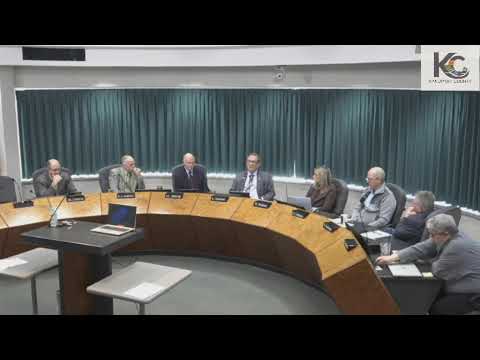
Kandiyohi County Sheriff Eric Tollefson told the County Board on Feb. 3 that the sheriff’s office investigated the federal 287(g) program to address instances when immigration detainers were not executed before a person’s release from local custody.
Tollefson said the county considered three 287(g) models — a task force, a jail‑enforcement model and a warrant‑service officer model — and opted for the warrant‑service officer option because it is administrative and confined to the secure jail environment. “This particular one only allows for the enforcement or the serving of these detainers…in the area that generally the public isn’t allowed to be,” he said.
Tollefson described the practical driver: correctional staff told him that on some occasions federal agents were unable to arrive before a scheduled release and the person left the facility before agents could take custody. That led the sheriff’s office to pursue a low‑involvement approach in which trained correctional officers could serve paperwork and facilitate a smooth transfer to federal custody.
But legal uncertainty remains. The sheriff reviewed recent Minnesota attorney general guidance and court developments, including the 2019 Nobles County decision, and said an AG opinion issued in 2025 concluded local agencies lack authority to detain people on civil immigration detainers. He said a later AG opinion flagged that a signed agreement could also fall under joint powers law and require county board approval, and that litigation — notably a Freeborn County case — is pending and may determine whether counties can implement 287(g)‑style arrangements.
Tollefson told commissioners the program would require only limited officer training (described as an eight‑hour online course, federal background checks and a written test), and he said roughly a dozen correctional officers had volunteered. He also said the county currently had six people in the jail with detainer status or pending detainers and that such situations are infrequent (he estimated two to four times per year).
During extended questioning, commissioners raised liability and fiscal concerns, noting language in the federal memorandum of agreement that could shift certain liabilities and expenses to local agencies. Commissioner Embek asked who would pay legal costs if the county were sued; Tollefson said some program costs are minimal — training can be completed in‑place and volunteers would serve while on duty — but acknowledged the liability question is material and urged reliance on county counsel and the outcomes of pending litigation.
Board members asked the sheriff to continue outreach and return with updates. Chair (speaker 2) and others underscored that the board wants to be informed before any implementation steps are taken. Tollefson said he has met regularly with local community leaders and law enforcement associations and will report back if training becomes available or court rulings change the county’s options.
The presentation was informational; the board took no formal action on 287(g) during the meeting.