Get Full Government Meeting Transcripts, Videos, & Alerts Forever!
Get email alerts on the Environmental Investigation topic
No spam. Unsubscribe anytime.
Consultants report marginal PAH exceedance at Whitford Middle School site; DEM requires further work
Summary
Consultants told a North Kingstown public meeting that a Phase 2 investigation at Whitford Middle School found one soil sample marginally above reporting criteria for polycyclic aromatic hydrocarbons (PAHs); the Rhode Island Department of Environmental Management issued a letter of responsibility and the town has a 10‑day public comment period. Consultants outlined next steps including delineation, remedial alternatives and coordination with RIDE and DOH.
A consultant presenting on the Whitford Middle School replacement project told residents on Thursday that a Phase 2 environmental investigation found one soil sample marginally above reporting criteria for polycyclic aromatic hydrocarbons (PAHs), and that the Rhode Island Department of Environmental Management (DEM) has required further delineation and remedial planning.
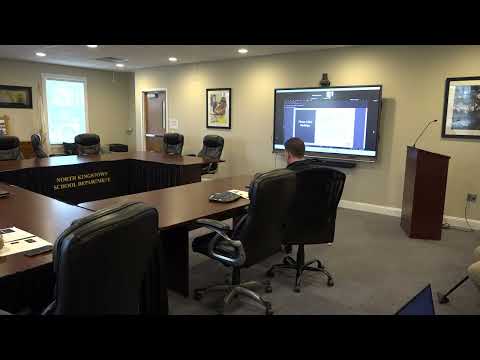
"We had one sample, TP10, with two PAH exceedances just above the residential direct‑exposure criteria," said Michael Flynn, a senior environmental scientist with Power Corporation, during the virtual public meeting. Flynn said the firm filed a hazardous materials release notification in January and DEM issued a letter of responsibility in March outlining next steps for the town.
The findings matter because construction will involve significant earthwork. Flynn said the Phase 2 program—12 borings (eight sampled), six test pits (three sampled), 10 perimeter samples and three groundwater wells—was designed to support foundation and site design work as well as to identify any conditions that require regulatory attention. "At the end of the day, we had one sample that had two of these PAHs just barely above the threshold for reporting," he said.
Flynn described two remedial alternatives DEM expects in the site investigation report: excavation and off‑site disposal of contaminated soils, or engineering/institutional controls (for example, capping). He said the current plan, if field conditions permit, is to excavate the localized PAH‑impacted soil during construction and collect post‑excavation confirmation samples to demonstrate removal.
A resident raised concerns that a historic "dump" or disposal area might exist in the ball field and urged more delineation. "There were little dumps all over the state," the resident said, urging the team to check for old cars and other debris. Flynn responded that Phase 1 included local reports of dumping, and that Phase 2 included test pits in the area but that the work did not find evidence of a formal landfill in the locations tested.
Megan Riley, a member of the school committee and co‑chair of the building advisory committee, asked for clarification about prior briefings; staff confirmed the Phase 1 report had been presented previously and is available online. Residents also raised concerns about poor drainage and a high water table in the neighborhood; Flynn said the current building footprint is at grade and the planned design does not include deep subsurface structures in the affected areas, but he acknowledged the design team will need to account for drainage and groundwater during engineering.
Attendees also asked whether the existing building will be tested for lead paint or PCBs. Flynn and school staff said demolition and abatement of building materials fall under the Department of Health process; the consultant noted that Vortex conducted asbestos analysis and that window caulking and other materials still need to be tested as part of demolition planning.
Flynn provided contact information for public comment (mflint@parquot.com as shown on the presentation slide) and gave the DEM site remediation program contact for follow‑up. He said the Phase 2 scope will be finalized after the public input period, the site investigation report will include two remedial alternatives, and required documents will be uploaded to the RIDE portal during the design review process.
The public comment period specified during the meeting is 10 days. The town will use the Phase 2 findings to prepare a site investigation report and a remedial action work plan describing the chosen approach and post‑excavation confirmation sampling or long‑term controls as required by DEM.