Get Full Government Meeting Transcripts, Videos, & Alerts Forever!
Get email alerts on the Transportation topic
No spam. Unsubscribe anytime.
District weighs diesel replacement after electric‑bus downtime and charging problems
Summary
Bethlehem Central officials described repeated electric‑bus operational problems during winter cold snaps, said chargers and charge‑management software remain inconsistent, and recommended a conservative nine‑bus diesel replacement while preserving an EV alternative contingent on state grants.
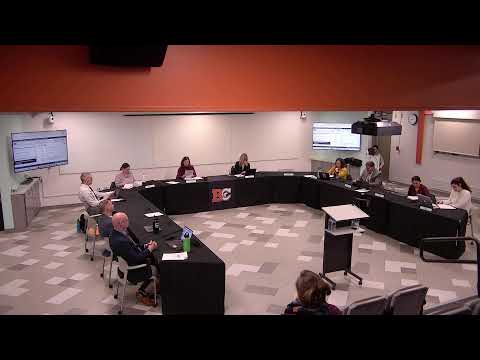
Bethlehem Central School District transportation leaders told the Board of Education on March 4 that setbacks with electric buses this winter have pushed the district to recommend a conservative diesel replacement plan while keeping grant‑backed EV options on the table.
Ellen Dorado, director of student transportation, said the fleet includes 10 electric buses among about 104 total vehicles and described frequent battery and charging shortfalls in cold weather. She recounted a driver’s December morning in which a bus left the lot at 100% charge and arrived at the school with the battery at 38 percent, forcing a mid‑run change to a diesel bus. “Temperature plays a huge role with electric buses,” Ellen said, and she added that several buses entered so‑called “turtle mode,” which limits speed and rendered vehicles unusable in subfreezing conditions.
Ellen and business office staff described several technical contributors: battery preconditioning requirements that can take hours, charge‑management software that reports a charger as active but does not always deliver power to the bus, and vendor‑coordination problems. Ellen said Matthews (the district’s vendor) has increased on‑site support and begun compiling guidance for districts on compatible chargers, charge management and bus configurations.
John McFillips reviewed replacement‑plan costing and grant possibilities. He said an EV large bus quote they received is about $485,000; New York State bus‑improvement vouchers can provide roughly $147,000 per bus plus add‑ons (for example, a $12,250 add‑on for vehicle‑to‑grid capability and scrapage credits) and state aid is reimbursed at gross cost over an extended payback period. John said, after grants and state aid, the eight‑year payback could yield minimal net district cost for EV purchases, but operational downtime and warranty/maintenance queues make diesel purchases a lower‑risk near‑term path.
As a result, district staff recommended replacing nine large buses with diesel models this cycle (estimated net district cost roughly $580,000 based on quoted prices and available state aid). John also presented an alternative proposition that uses available state and grant funding to purchase EVs; he cautioned that the proposition’s gross price would be substantially higher but that grant and state aid could reduce net cost over time. The board was told the district has secured tentative grant capacity to support at least three EV acquisitions if the board elects to pursue that route.
Board members asked about two interdependent policy drivers: a 2027 limit on further fossil‑fuel bus acquisitions and a 2035 target for full fleet electrification. McFillips and Ellen said waiver processes exist but are unsettled and that warranty periods on early EV purchases are beginning to expire — a factor that will require decisions about in‑house training, on‑site repair capacity, or continued reliance on vendor maintenance.
No replacement vote was held. Board members asked staff to provide a diesel‑vs‑EV downtime cost comparison and a side‑by‑side of recent diesel bus downtime for the next meeting so trustees can weigh operational reliability alongside long‑term environmental and fiscal considerations.