Get Full Government Meeting Transcripts, Videos, & Alerts Forever!
Get email alerts on the Mayoral Campaign topic
No spam. Unsubscribe anytime.
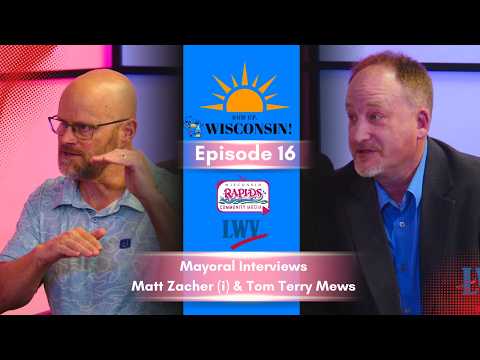
Matt emphasizes mill redevelopment, entrepreneurship and fiscal restraint in Wisconsin Rapids campaign
Summary
Matt, a mayoral candidate in Wisconsin Rapids, said redeveloping the shuttered paper mill, restraining the city budget within state levy limits and promoting entrepreneurship are his top priorities if re-elected. He urged citizen engagement and regional cooperation on EMS and services.
Matt, a mayoral candidate in the Wisconsin Rapids candidate spotlight, said the community’s top long-term challenge is managing the transition after the paper mill’s decline and restart and that local entrepreneurship and fiscal discipline must drive recovery.
The most immediate economic issue, he said, is the scaled-down operation and redevelopment of the former consolidated mill complex. “The mill…they own the entire base mill. So they’re bringing in new machines. They’re bringing in more employees. They’re about 165 employees there now,” Matt said, describing separate converting operations with roughly 155 employees and the site’s roughly 25 connected buildings. He called the large “16-building” structure particularly difficult to repurpose and said resolving that will take years.
Matt listed four priorities if elected: improving communication across the city’s 15 departments, tightening the budget to match declining revenues, supporting entrepreneurship through existing educational and grant programs, and continuing mill redevelopment work for the next decade. “Communication is always going to be key…Budget’s always going to be my big one,” he said.
On municipal finances, Matt said state-imposed levy limits constrain choices. He described the city’s levy as about $14 million and warned that shrinking commercial and industrial assessment bases mean fewer resources to deliver services. “If that shrinks, we’re going to have to have less people in the government,” he said, adding that officials will have to decide which services to prioritize.
About the mill’s property-tax valuation, Matt said the state handles assessments for very large industrial parcels and that valuation disputes between the state and the property owner (identified in the program as Capital Recovery Group) are working their way through the state process. “Somewhere in the middle is where it’s going to come out,” he said.
On infrastructure, Matt said a federal requirement to remove lead service lines (he cited a 2037 timeline) drives the need for a local ordinance: without an ordinance the city cannot apply for many grants. He warned grant funding is limited and that residents may bear some replacement costs if outside funds are insufficient.
Matt described regional cooperation on emergency medical services as a recent focus. He said city leaders examined a larger district option that looked too costly per capita, then proposed a co-op model asking neighboring communities to fund roughly their share of call volume — a proposal that, he said, resulted in some partners agreeing to pay more than before to secure predictable service and budgets.
He closed by urging civic engagement and volunteerism and by saying his campaign has spent two years building interdepartmental and regional relationships he would continue if re-elected. The program noted the April 7 election date for which both guests are campaigning.