Get Full Government Meeting Transcripts, Videos, & Alerts Forever!
Get email alerts on the Supplemental Budget topic
No spam. Unsubscribe anytime.
Governor's supplemental budget would shift SNAP costs to Minnesota and add funds for fraud prevention and system modernization
Summary
At an informational committee hearing, Department of Children, Youth and Families Commissioner Brown laid out a governor's supplemental budget that would cover SNAP state‑share costs tied to HR 1, expand fraud‑prevention capacity for the Child Care Assistance Program (CCAP), and fund phased modernization of legacy eligibility systems and an applicant portal.
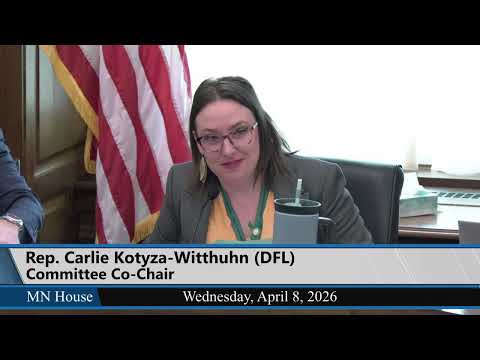
At a hearing of the Minnesota House Children and Families Finance and Policy Committee, Department of Children, Youth and Families Commissioner Brown presented the governor's fiscal 2026–27 supplemental budget proposal and described measures to respond to federal changes in HR 1 that affect SNAP administration.
The governor's package, Commissioner Brown said, would pay the federally required state share of SNAP benefits that begins in federal fiscal year 2028 and is tied to payment‑error rates. "This recommendation protects SNAP for Minnesotans by paying the federally required state share of benefits," Brown said, adding the department also seeks investments in case reviews, enhanced training and oversight to reduce error rates.
Why it matters: Members raised concern that HR 1 shifts fiscal exposure to state and local governments. Vice Chair Hanson said the federal reconciliation changes create significant new costs and framed the supplemental as an effort to absorb those costs without cutting services. Several members pressed how much of the budget is one‑time and how much is ongoing, and whether proposed staffing and technology investments could reduce payment errors enough to lower long‑term state costs.
What the proposal would fund: The department described a multi‑year package that combines near‑term actions tied to HR 1 with longer‑term modernization. Elements discussed in the hearing include: - Investments to improve SNAP payment accuracy and administration, including real‑time case reviews and expanded workforce training for new and experienced workers; a certified "train the trainer" pilot; and funding to help local agencies increase program‑integrity capacity. - Technology and access work: purchase of a consolidated policy and systems manual with AI search features, an "access integration layer" to let modern tools communicate with the legacy eligibility system, expanded income‑verification technology and a secure applicant portal to reduce eligibility errors and speed processing. - CCAP program‑integrity measures: creation of a new team of investigators to increase unannounced site visits, a single case‑management system for investigations and enhanced data‑analytics capacity to proactively identify risks. The department also proposed making an enhanced CCAP provider training mandatory and trackable. - Legacy system modernization and study funding: the presentation identified phased access improvements (the department cited a $25 million FY27 request and ongoing amounts in its summary), $2.7 million one‑time for a comprehensive study of service delivery through technology modernization, and staff positions to sustain cross‑agency work.
On staffing and scale: DCYF budget staff said the proposal would fund approximately 9.75 full‑time equivalent positions in FY27, ramping to 13 FTEs later; officials said six would expand investigative capacity and others would expand data analytics and local support.
County concerns and funding questions: Multiple members asked whether the supplemental includes direct funding for counties statewide. Representative Hinson and others noted that Hennepin and Ramsey counties were singled out for an extension of funds tied to the Minnesota African‑American Family Preservation and Child Welfare Disproportionality Act, and asked why other counties do not receive comparable funding. Commissioner Brown said the extension in the proposal applies to Hennepin and Ramsey and that no other counties were included in that provision.
MAXIS and the 2023 IT appropriation: Committee members repeatedly asked how earlier legislative IT dollars (cited in 2023) were spent and whether the department would use existing funds to fix MAXIS, the state's legacy eligibility system. DCYF staff said a portion of prior funds transferred for specific projects (for example, access notices) and that the department is piloting improvements to notices and building an integration layer to allow modern solutions to interact with MAXIS rather than attempting an immediate, full replacement.
On fraud recapture and penalties: Members asked whether the proposal assumes recovered funds or penalties from providers to offset the investment in investigators and training. Commissioner Brown and staff said they did not have recapture figures available at the hearing and would follow up; they also said DCYF had not yet proposed specific sanctions tied to the mandatory CCAP training.
Procedure and next steps: The hearing was informational; no committee votes on the supplemental were taken at this meeting. The department provided members with a summary document and slide packet and said it would follow up with additional detail on funding sources, recapture estimates and implementation timelines.
Ending: Committee members thanked the commissioner for the presentation and asked for follow‑up information on county impacts, recapture expectations and the phased approach to system modernization. The committee adjourned with its next meeting scheduled for April 14 (per committee announcement).