Get Full Government Meeting Transcripts, Videos, & Alerts Forever!
Get email alerts on the Service Navigation topic
No spam. Unsubscribe anytime.
Housing authority centralizes resident services as councilors press on accessibility, youth transitions and language access
Summary
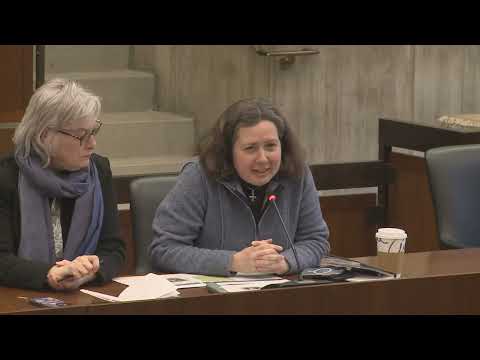
Boston hearing on March 3, 2026 examined how the city connects residents with complex family and caregiver needs to services. Housing authority leaders described a reorganization to centralize resident programming, cited capacity and funding limits, and answered councilors' questions about elevators, summer services for students with disabilities and language access.
Boston City Councilors heard on March 3, 2026 from city and housing authority officials about efforts to help residents with complex family and caregiver needs navigate services across departments.
At a Committee on Human Services hearing (Docket 0285), Jose Marceau, chief of Human Services, framed the work as front-line coordination: "Our cabinet is where the people are," he said, describing six departments and roughly 70 locations that provide daily support to families in need.
Officials from the housing authority described a recent reorganization that consolidates resident services—elderly and disabled supports, youth programming, workforce development, family economic mobility and language access—under a new vertical led by Deputy Administrator Lydia Agro. The housing authority representative said, "There are about 17,000 who live in the VHA communities that are generally known as public housing," and an additional roughly "44,000 who we serve through our voucher programs." The speaker added that many resident-service positions were cut in the late 1990s and the agency has been rebuilding program capacity locally.
Lydia Agro and other presenters highlighted on-site programs the authority runs or partners on, including a reopened Franklin Field after-school and workforce program, the Charlestown Education Center that provides reentry and adult-education supports, and resident-centered efforts like wellness and "unity day" events. Agro described partnerships that refer residents to Age Strong, workforce training, and public-health initiatives, and noted that some programs rely on city funding and philanthropy.
Councilors pressed the panel on concrete service gaps and operational problems. Councilor Flynn asked about elevator outages and accessibility, saying an elevator commission should review VHA properties and calling elevator access "in my opinion ... a civil rights issue." Housing authority staff said several elevators are offline for planned modernization projects but that there were "no unplanned outages of elevators right now," and agreed to follow up with a precise count of out-of-service lifts.
Lawmakers also sought details about summer services and youth transitions. A Boston Public Schools senior advisor for specialized services said extended-school-year services for students with disabilities (BEEPS) provide related services such as speech, occupational and physical therapy and estimated that between about 2,500 and 4,000 students receive summer services depending on Individualized Education Program (IEP) determinations. Panelists described transition planning that begins by law at age 14 and new programs intended to support students aged 18–22 as they move into adult systems.
On economic mobility, the housing authority told the committee its family self-sufficiency program has expanded nationally and locally: the panel said the program has graduated more than 185 families who accrued over $1.2 million in escrow and that about 1,500 families currently hold a combined escrow balance of approximately $10.2 million.
Councilors repeatedly asked for data not at the table—percentages of residents with disabilities, up-to-date elevator outage lists and counts of youth engaged in specific transition programs—and officials committed to provide those figures after the hearing. Panelists also confirmed the federal housing voucher program remains oversubscribed and that the authority is not currently issuing new vouchers.
Language access and outreach drew sustained attention. Boston Public Schools staff described live interpretation, translated written communications and a ParentSquare platform that allows families to set a preferred language. Councilor Flynn noted a need for Cantonese-language supports and offered staff assistance if needed; the schools said they have added Cantonese interpreters to better serve that community.
The hearing closed with councilors urging continued coordination across city departments, health systems and philanthropic partners to expand wraparound services—particularly nursing and preventive health supports in elderly buildings—and with officials noting that public-housing operating funds alone cannot cover all desired services. Chair Erin Murphy said the conversation should continue into the budget season and reminded the committee of Docket 0285.
The committee did not take votes at the hearing. Officials agreed to supply requested statistics and a follow-up on elevator service status.