Get Full Government Meeting Transcripts, Videos, & Alerts Forever!
Get email alerts on the Financing For Development topic
No spam. Unsubscribe anytime.
UN officials warn developing countries face ‘catastrophic’ financing squeeze as ODA falls 23% in 2025
Summary
At a UN DESA briefing, Under‑Secretary‑General Li Junhua and DESA colleagues presented the Financing for Sustainable Development Report 2026, warning that a 23% drop in official development assistance in 2025 and rising debt pressures threaten progress on the SDGs; DESA urged implementation of the Seville Commitment.
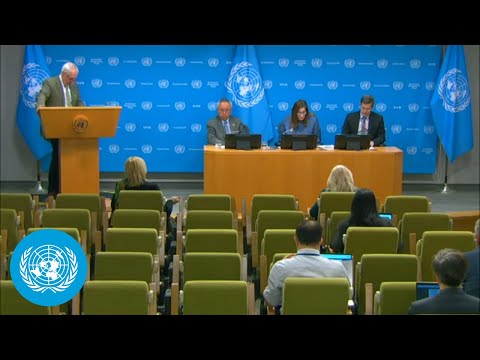
Under‑Secretary‑General Li Junhua told reporters at a United Nations Department of Economic and Social Affairs briefing that progress on the Sustainable Development Goals is being “impaired by the global fragmentation, geopolitical tensions, and conflicts.” He said the Financing for Sustainable Development Report 2026 shows a ‘‘clear and urgent’’ financing gap and that official development assistance (ODA) contracted sharply in 2025.
Li said the 2025 data show 25 countries decreased their ODA, producing a 23% overall drop from 2024 to 2025 and warned that preliminary numbers point to a further 5.8% decline in 2026. "Developing countries are trapped in a catastrophic financing squeeze from compounding shocks," he said, and added that debt‑service burdens are at two‑decade highs.
The briefing framed the Seville Commitment — agreed at the Fourth International Conference on Financing for Development in Seville — as the roadmap to close widening financing gaps. DESA officials highlighted three pillars of the Seville roadmap: tripling multilateral development bank capital pools, leveraging private finance for SDG investment, and increasing domestic resource mobilization through taxation and capacity building. "The Seville Commitment lays out a road map for increasing investment in a very challenging environment," said Shari Spiegel, Director of the Financing for Sustainable Development Office at DESA.
The officials emphasized both risks and some positive indicators. Global growth was 2.7% in 2025, below the pre‑pandemic 3.2% level; South Asia grew about 5.6%. DESA also flagged that South‑South trade now accounts for roughly 54% of developing‑country exports and that renewable energy investment reached about $2.2 trillion in 2024, surpassing fossil‑fuel investment.
Reporters pressed the panel on sources of funding and donor behavior. Edith Lederer of The Associated Press asked where funding to meet the 2030 goals will come from; DESA reiterated the three Seville pillars as the response. When asked which donors cut ODA, DESA said the five largest providers that reduced ODA in 2025 were Germany, the United States, the United Kingdom, Japan and France, and that only four countries met the 0.7% ODA target in the latest data: Denmark, Luxembourg, Norway and Sweden.
On governance and domestic revenue, DESA noted roughly 70–76 countries remain below a 15% tax‑to‑GDP threshold that many analysts view as the minimum for fiscal sustainability. Officials stressed work on reducing illicit financial flows, improving tax administration and international tax cooperation under UN processes.
Reporters asked about conflict shocks and specific trade routes. DESA said the recent conflict in the Middle East already has short‑term impacts on energy, food and trade that increase inflation and borrowing costs; officials declined to offer country‑by‑country collapse timeframes and referred detailed quantification to the economics teams and to UNCTAD and UNDP reports.
DESA said it would publish a short summary and the OECD data referenced in the briefing on its website. The briefing closed with a call from Li for member states to move from rhetorical commitments to concrete mechanics and financing actions to implement the Seville Commitment.