Get Full Government Meeting Transcripts, Videos, & Alerts Forever!
Get email alerts on the Kosovo Political Process topic
No spam. Unsubscribe anytime.
UN representative says Kosovo has made progress but presidential election remains unfinished
Summary
Mr. Diarra told the Security Council Kosovo saw peaceful legislative and municipal votes and swift government formation, but the presidential election remains unresolved after a 25 March Constitutional Court ruling giving the assembly 34 days to elect a president.
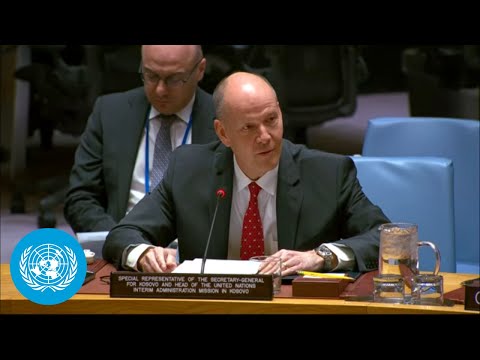
Mr. Diarra, speaking on behalf of UNMIK, briefed the United Nations Security Council on Kosovo’s political trajectory and outstanding challenges. "It is an honor to brief the Security Council on Kosovo after having assumed my duties 3 months ago," he said, noting prior service in Pristina and Belgrade and calling the recent period "one of momentum" for the country.
He said legislative elections held at the end of December were "conducted in a peaceful and inclusive atmosphere" and pointed to the swift constitution of the assembly and timely formation of a government as indicators of stability. At the same time, Mr. Diarra cautioned that the process of electing a new president has not been completed. He cited a 25 March decision by the Constitutional Court that the assembly still had 34 days to elect a president and said, "Let us hope that differences can be bridged a new president can be elected and that new legislative elections can be avoided."
The briefing emphasized the importance of implementing existing agreements and sustaining EU-facilitated dialogue between Belgrade and Pristina. Mr. Diarra welcomed progress in the EU-mediated talks and commended the European Union and its special representative, Mr. Peter Sørensen, for their engagement. He highlighted the convening in Brussels of a joint commission on missing persons in a trilateral format as a constructive step and praised recent agreement on implementing the law on foreigners as a measure that should "help ensure uninterrupted access to education and health care."
Mr. Diarra urged both sides to build on that momentum by advancing implementation of agreements including the establishment of an association/community of Serb-majority municipalities, and expressed hope for a near-term high-level meeting between President Vučić and Prime Minister Kurti. He framed these steps as essential to keeping institutions focused on the public interest and preventing renewed political instability.
The Council thanked Mr. Diarra for his briefing; a Council speaker then moved the agenda to the next item.