Get Full Government Meeting Transcripts, Videos, & Alerts Forever!
Get email alerts on the Public Safety Complex topic
No spam. Unsubscribe anytime.
Erie council hears update on Miller Brothers public safety complex; phase one under budget, phase two funding uncertain
Summary
City staff told the Erie City Council that Phase 1 of the Miller Brothers public safety complex — including roof repairs and four prime construction contracts — is underway and coming in under budget; council members pressed for community outreach, details on equipment purchases and clarity about phase-two funding, which depends partly on a pending $2.6 million federal appropriation.
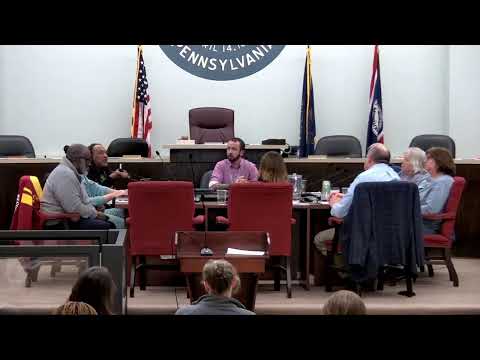
Erie City Council received a study-session briefing on the Miller Brothers building project and the planned public safety complex, including an update on Phase 1 costs and a briefing on Phase 2’s Emergency Operations Center (EOC).
Jason, who led the presentation, summarized the project’s background, saying the city completed a 2022 feasibility study and a 2023 cost analysis and purchased the Miller Brothers building in 2023 for $2.7 million using ARP funds. He told the council the phase-one design work by Roth Mars cost about $374,000, supplemented with $25,000 from the general fund.
Why it matters: The project will consolidate fire, police and support functions in one complex, replace aging equipment and give the city a centralized command facility for disasters. Council members pressed staff for schedule detail, cost breakdowns and ways to engage the nearby neighborhood about the site.
Phase 1 details and budget: Jason described Phase 1 as two workstreams: A1 (roof repair) and 1B (four prime contracts covering general contracting, plumbing, mechanical/HVAC and electrical). Contractual start dates were cited as Aug. 19 for roof work and Oct. 28 for the four-prime contracts; staff said the combined Phase 1 (A and B) is expected to conclude in fall 2026.
Staff showed contract awards and bid figures: the roof contract arrived under estimate and, after two change orders (about $69,000 and $44,000), totaled roughly $797,000; the general contractor (Perry) was listed at about $1.6 million, electrical at roughly $844,000, plumbing at about $577,000 and mechanical at approximately $574,000. Jason said most trades attracted multiple bids (roughly three to five firms for many scopes).
Equipment and operations: The presentation listed roughly $500,000 in anticipated fire-equipment purchases, including post lifts and mobile columns for heavy trucks, an air compressor, an SCBA washer/extractor and gear dryers. Chief Laura said much of that equipment is new to the department, will replace decades-old gear and will improve safety and evidence handling by moving storage and processing to the new facility.
Funding and bond accounting: Staff explained the $20.5 million bond package split across fund codes; Melissa from finance said the council ordinance passed a second reading on Dec. 17 and that fund 021 contains the bond proceeds. Jason outlined additional funding lines: ARP capital funds paid the $2.7 million purchase, an urban-core economic recovery grant supported design, and smaller grants (including an EPD grant of about $14,000) will pay specific infrastructure items such as V‑Net fiber. Staff emphasized bond spend-down rules — 5% expended in six months and 85% within three years — as a driver of the project timeline.
Phase 2 (EOC) and timing: Staff described Phase 2 as the city’s Emergency Operations Center and central command facility for disasters, a logistics hub for supplies, and a consolidated workspace for police, fire and public-works coordination. Chief Laura said an EOC provides phone and internet redundancy, space for partner agencies, logistics staging and secure evidence processing. The tentative schedule presented: finalize programming and scope by Feb. 2026, select a design consultant in May, complete plans/specs by September and potentially award construction in fall 2026 with construction in 2027.
Phase 2 funding remains partly uncertain. Jason said the city expects roughly $14.5 million of bond proceeds for Phase 2 and has a pending $2.6 million federal appropriation that has passed the U.S. House (credited to Representative Kelly’s office) and awaits Senate approval; staff cautioned the appropriation is not guaranteed until the Senate acts. Design, contractor bids and market cost inflation will determine whether those funds are sufficient.
Community concerns and next steps: Council members, including Councilman Horton, said neighborhood residents — particularly on the east side near the site — have concerns about siting a public-safety campus adjacent to an area they described as having higher crime. Councillors asked for tours, more outreach and community events to explain facility use and benefits. Staff agreed to make the slide deck available to council and to host site tours.
Fiscal oversight: Several council members urged vigilance on cost control and said the city will work with PFM to model five‑year fiscal scenarios and debt impacts. Staff noted potential avenues to seek grants or partner organizations if phase-three options require additional funding.
What’s next: Staff will make the presentation materials available, continue design work for Phase 2, and await federal appropriation action while advancing the Phase 1 construction and equipment procurements. The council reconvenes for the next session as scheduled.