Get Full Government Meeting Transcripts, Videos, & Alerts Forever!
Get email alerts on the Civil Rights Litigation topic
No spam. Unsubscribe anytime.
Panel restores supervisor liability in civil-rights bill and approves measure
Summary
The House Judiciary Committee on April 8 amended and approved Senate Bill 346 to restore language allowing suits against federal officers and their supervisors for constitutional violations; the bill passed the committee 12-6 with one excused.
The House Judiciary committee on April 8 approved an amendment to Senate Bill 346 (titled in committee: Civil Actions Violation of Constitutional Rights, the 'No Kings' Act) that restores language allowing an aggrieved party or the Attorney General to bring actions against a covered federal officer and, in some circumstances, that officer's supervisor.
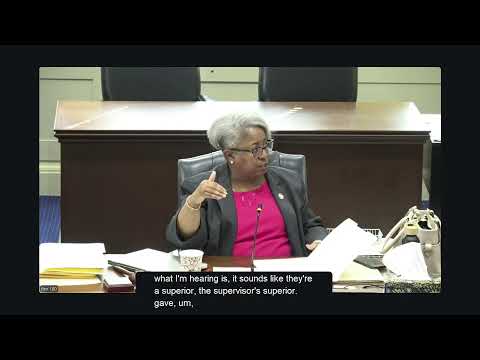
Committee members debated whether the restored language would permit suits against supervisors who "cause or allow" constitutional violations. Holly, who explained the amendment on the record, said the change adds back a respondeat-superior provision so "you would be allowed not just to sue the office or the federal officer, but also their superior and you know, up the chain if they were responsible." The committee adopted the amendment and then passed the bill by roll call, 12 yes, 6 no, 0 abstain, 0 absent, 1 excused.
Why it matters: Sponsors and members said the language brings Maryland law closer to the remedial posture of what members called a "1983 action," enabling private suits for constitutional violations that members said state law currently permits only against state or local officials. During questioning, members raised examples of potential Fourth Amendment concerns and asked whether the change was intended to address immigration enforcement. Sponsors said the language applies to all federal officers covered by the bill's definition, not only immigration agents.
Supporters argued the amendment restores civil remedies for victims of alleged constitutional violations by federal actors and clarifies the scope of defendants. Opponents pressed for limits and for clearer distinctions between individual supervisors and entire agencies; counsel and sponsors responded that the bill defines "covered officer" and that courts would adjudicate defenses such as following orders.
The amendment discussion included questions about practical effects: a committee member asked whether a supervisor who was unaware of an employee's actions nonetheless could be liable; counsel said liability would turn on causation and facts for a court to decide. Committee debate also clarified that the bill's definition of "covered officer" focuses on officers authorized to make arrests or carry firearms and includes a narrowly described exception for officers serving on certain joint task forces.
The committee concluded its vote session after approving the amendment and passing Senate Bill 346. The next procedural steps would be official transmittal and any further floor action; the transcript records the committee adjourned after the roll call.
Actions at the committee: The committee adopted the amendment restoring respondeat-superior language and passed Senate Bill 346 by roll call (tally 12 yes, 6 no, 0 abstain, 0 absent, 1 excused).