Get Full Government Meeting Transcripts, Videos, & Alerts Forever!
Get email alerts on the Zoning Ordinance topic
No spam. Unsubscribe anytime.
Norfolk launches large rewrite of zoning 'Article 5' to clarify rules for renovations and convert resilience points to incentives
Summary
City planners outlined a multi‑phase rewrite of Article 5 (development standards) to clarify applicability for renovations vs. new builds, simplify outdated requirements, and change the resilience quotient from a prescriptive points system to an incentive‑based menu; staff aims to return parts of the draft in May.
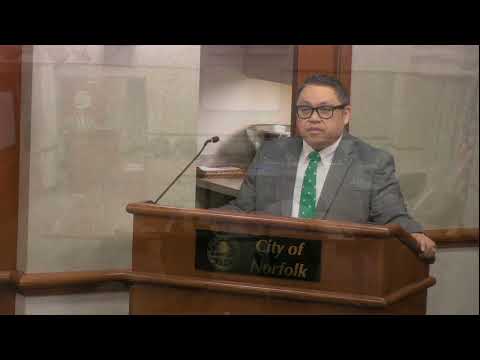
City planning staff told the Norfolk Planning Commission they are launching the largest zoning text amendment since adoption of the zoning ordinance to rewrite Article 5 (development standards) and to simplify rules that currently confuse applicants and staff.
"This is actually the biggest text amendment that we've done since we adopted zoning," said Jeremy, a city planner, describing a three‑phase plan focused first on clarifying which rules apply to renovations versus new development, then converting the resilience quotient into an incentive‑based system, and finally streamlining internal processes. Staff said the rewrite will parse applicability across the 12 subsections of Article 5 so that typical renovation triggers (for lighting, landscaping, screening and form standards) are clear and easier to apply.
Under current rules the resilience quotient requires developers to meet a points threshold — for single‑family projects that has included raising the house 16 inches above grade, capturing 200 gallons of stormwater and prewiring for a generator. Jeremy told commissioners that many of those requirements are now covered by building codes or other sections of the ordinance and that the proposal would let developers choose resilience interventions in exchange for regulatory reductions (for example, allowing a reduced parking requirement in exchange for porous paving or tree planting).
Commissioners and staff discussed outreach: staff said they have met regularly with the Coastal Virginia Building Industry Association and plan meetings with builders, engineers and architects, but that broader community outreach will also be needed because some provisions are technical and hard for residents to interpret. Jeremy said staff aims to bring the structural applicability edits to the commission in May and to phase in resilience and process improvements later in the year.
The commission did not act on the rewrite at the meeting; staff emphasized the project will return in pieces so commissioners and the public can review specific edits.