Get Full Government Meeting Transcripts, Videos, & Alerts Forever!
Get email alerts on the Municipal Budget topic
No spam. Unsubscribe anytime.
San Carlos staff present conservative FY2025–27 budget as sales‑tax shortfalls and pension costs bite
Summary
City staff presented a recommended FY2025–27 operating budget that counts on conservative revenue estimates, limited use of reserves and modest staffing additions while warning of sales‑tax declines and pension/health cost pressures; council directed staff to return with funding options and to prioritize capital transfers.
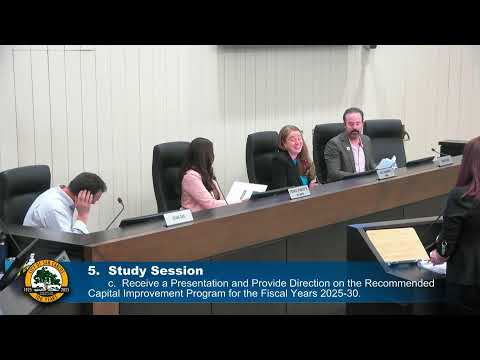
San Carlos city staff presented a conservative recommended biennial operating budget April 29, warning that declining sales and development revenues, rising pension and health costs, and tight timing on revenue recognition leave only a small cushion in the general fund.
Rebecca Mendenhal, the city’s administrative services director, said the staff‑recommended budget projects general fund revenues of about $61.6 million and expenditures of roughly $67 million in FY2026, producing modest projected deficits that would be covered in part by planned, limited uses of fund balance. The budget anticipates using $500,000 of unassigned fund balance in fiscal year 2025–26 and $750,000 in 2026–27, she said. Mendenhal also noted a continuing structural headwind: an estimated $3 million annual shortfall tied to declines in sales tax and development‑related receipts.
Mendenhal told the council the budget assumes modest growth in property tax revenue while lowering sales‑tax expectations and taking a conservative four‑year average for volatile lines such as plan check and permit fees. Among other assumptions: a 6.8% CalPERS expected return is below actuals so the city included pension‑related rate projections, medical premiums rising about 10% and operating inflation for capital outlay.
Council members pushed for clarity on several technical points. They asked how e‑commerce sales are allocated (Rebecca Mendenhal and staff explained that e‑commerce receipts flow into a county pool and San Carlos receives a share—about 5% historically—allocated by the county), how timing of development affects assessed values, and how vehicle license fee shortfalls (noted as roughly $2 million a year) will be addressed.
Several council members said they want to preserve service levels while building contingency plans. Council Member John Rack said he supports measured staffing investments—he explicitly backed adding a parks and recreation supervisor to manage growing programs—while urging staff to hold the line on new recurring costs. Others urged staff to return with alternatives that use one‑time savings and salary‑savings contingencies to close small gaps without long‑term hiring commitments.
Mendenhal emphasized the city’s healthy reserves—general fund reserves are projected near $30 million, or roughly 43% of general fund expenditures, exceeding the council’s policy minimum—while noting that much of the balance is assigned for facilities and infrastructure and for legacy liabilities. She recommended a cautious approach to new recurrent commitments and confirmed staff will return with mid‑cycle updates as revenues crystallize.
Next steps: the council received the study session presentation and asked staff to report back with more detail on reserve flexibility, multiple funding scenarios for key one‑time requests and prioritized options for items such as a proposed recreation supervisor and community foundation grant support.