Get Full Government Meeting Transcripts, Videos, & Alerts Forever!
Get email alerts on the Unified Development Code topic
No spam. Unsubscribe anytime.
Livingston Parish Planning and Zoning Commission reviews Unified Development Code, flags R‑3 reactivation and mobile‑home rules
Summary
At a May 12 public hearing, WSP consultants presented a reorganized Unified Development Code for Livingston Parish and outlined a timetable for council introduction; commissioners debated reactivating the R‑3 zoning, mobile‑home waiver lists, family-partition rules and technical clarifications.
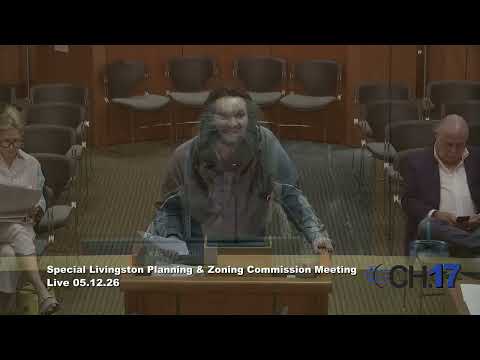
The Livingston Parish Planning and Zoning Commission held a public hearing on May 12 to review a proposed Unified Development Code (UDC) intended to consolidate the parish’s land‑use, zoning, subdivision and development regulations.
Nathan Lipson, a planning consultant with WSP, told the commission the consultant team planned to deliver a finalized UDC to the parish council for introduction on May 28, with a parish hearing likely the week of June 22 and a potential adoption date in late July. "Today was intended to be the day that you recommend this version to the council for adoption," Lipson said, adding that the commission’s comments would be recorded and folded into the next draft.
Why it matters: the UDC would reorganize hundreds of pages of existing ordinance language and set the rules that govern where homes, subdivisions, commercial projects and infrastructure can be built in Livingston Parish. Commissioners said small wording changes could have large practical impacts on frontage requirements, permitting timelines, enforcement and private property rights.
Key issues raised
R‑3 zoning. Commissioners debated whether to reactivate the R‑3 (higher‑density residential) district. One commissioner said R‑3 could provide more affordable housing options in corridors with infrastructure, while another urged caution: "I'm not in favor of reactivating it at least as part of this process because I think it has been such a contentious issue that it should be given proper public hearing," the commissioner said, arguing the zoning category needs clearer landscaping, architectural and rental‑property standards before broad reactivation.
Mobile homes and the waiver list. WSP proposed a middle path for manufactured/mobile homes: keep an appendix list of named subdivisions where administrative approvals for mobile homes would remain allowed, and require individual waivers or council action for parcels not on the list. Under the draft, a single administrative approval would no longer automatically add a subdivision to the waiver list; any additions or removals to that list would be made by council action. Commissioners asked staff to clarify whether revisions to that preapproved list would require ordinance, resolution, or what vote threshold.
Family partitions. The draft creates an administrative family‑partition path designed to allow limited lot divisions so immediate family members can remain near relatives. Lipson described the proposal as allowing recorded lots as small as a half‑acre in some zones (a stated minimum), subject to frontage and other requirements; commissioners raised concerns about lot configurations that lack sufficient frontage and suggested planning‑director discretion for marginal cases.
Hazardous‑waste special uses. The consultants recommended raising the voting threshold for special‑use permits involving hazardous waste or landfills to two‑thirds of the council’s total membership (a minimum of six affirmative votes) rather than a simple majority or unanimity, to reduce the risk that a single council member could indefinitely block a necessary regional facility.
Technical and procedural changes. Commissioners and WSP staff identified numerous technical edits and legacy language to correct (definition inconsistencies, typographical duplications, language referring to mobile homes as "trailers"). The draft also moves overlays (historic, airport and conservation overlay rules) to Article 5, references the drainage and roadway criteria manuals, updates several setback and accessory‑building dimensions and clarifies which studies (traffic, drainage, fire, school impact) attach to subdivision approvals.
Carbon sequestration and legal limits. WSP noted Section 806 (carbon‑sequestration regulations) is included as a placeholder but said, "based on State law, is unenforceable" at present; the consultant recommended retaining the language so the parish can act promptly if state authority changes. Commissioners suggested extracting broader emergency‑response elements (for pipelines, well failures and similar incidents) into a separate, clearer section.
Enforcement concerns. Commissioners questioned some enforcement provisions, including a proposed seven‑day compliance period for pool maintenance and a tiered penalty structure that included potential days in jail for repeated offenses. Several members urged treating routine homeowner problems differently from public‑health hazards and suggested longer compliance windows.
Next steps. WSP asked commissioners to submit written comments by the following Thursday; the firm said it would post a clean UDC and a change log and then provide an introduction package to the council on or about May 28. The commission closed the public hearing and the meeting was adjourned.
No formal votes were taken during the hearing; the UDC remains under review and will return to the council for consideration after WSP incorporates the commission’s comments.