Get Full Government Meeting Transcripts, Videos, & Alerts Forever!
Get email alerts on the Foreign Policy topic
No spam. Unsubscribe anytime.
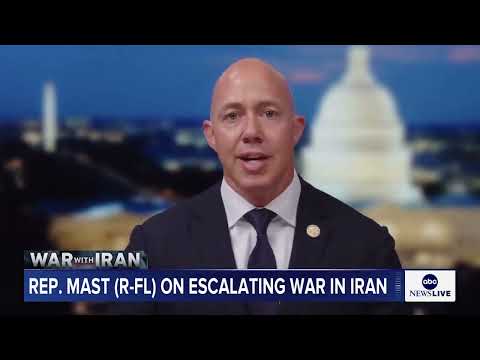
Representative Brian Mast defends limited strikes on Iranian hardware, says Congress was notified and rejects boots on the ground
Summary
Representative Brian Mast said the U.S. is conducting targeted combat operations to destroy Iranian military hardware that threatens U.S. forces, said Congress received briefings via the "gang of eight," advised stranded Americans on evacuation logistics and said he does not support deploying U.S. ground troops.
Representative Brian Mast, chair of the House Committee on Foreign Affairs, said the United States is conducting "combat operations" aimed at destroying Iranian military hardware capable of reaching U.S. forces and defended the president's decision as falling within Article II authority.
Mast told the program he and other lawmakers were briefed in advance, saying Congress was notified "through the gang of eight roughly a week before" the operation and that a classified briefing had been held shortly before the interview. He described the operation as narrowly scoped: "It is absolutely combat operations, but the operation is [to] destroy every single piece of Iranian military hardware that can reach out and touch United States forces." He added, "We know this operation is complete when that is conducted. That is mission accomplished."
The congressman argued the strikes were justified by an imminent threat, saying Iran "trains these proxies, they fund these proxies, they direct these proxies to go out there hit and hit Americans and our allies." He said negotiations with Iran were "not going well" and that the threat environment extended beyond direct nuclear issues to missiles and proxies. Mast also linked recent American losses to the broader threat, saying the deaths "weigh[] on my heart" and that the nation will mourn "these six that we've lost."
On congressional consultation, Mast said briefings provided notification and legal rationale, and he argued the president acted within constitutional executive authority to defend against an imminent threat. He cited Article II authority as the legal basis mentioned in briefings.
Mast also addressed people in the region seeking evacuation. Citing a report that roughly 1,500 Americans had requested assistance, he encouraged U.S. citizens to contact their members of Congress with precise information — location, health status, ages, party size and mobility — so offices can relay details to consulates and embassies. He warned that air evacuation windows could be short, "an hour or a couple of hours," and said officials were exploring use of the largest aircraft possible and land corridors to reach commercial flights.
Asked whether he would support sending U.S. ground forces, Mast said, "There is no reason for us to put boots on the ground," adding that Iranians "need to be the boots on the ground for changing the future of their country." He reiterated that the U.S. will continue combat operations when tactically or strategically necessary.
The interview closed without reference to any pending congressional vote or formal legislative action; Mast emphasized briefings and consultation as the primary oversight touchpoints reported during the segment.