Get Full Government Meeting Transcripts, Videos, & Alerts Forever!
Get email alerts on the Streets Plan topic
No spam. Unsubscribe anytime.
Council hearing frames ‘new era’ for Streets Plan as DOT vows faster delivery; outdoor dining expansion draws controversy
Summary
At a March oversight hearing, DOT told the Council it will accelerate street-safety projects and focus the 2026 Streets Plan on outcomes — but residents warned that proposals to expand year‑round roadway dining risk noise, sanitation and winter-safety problems without stronger enforcement.
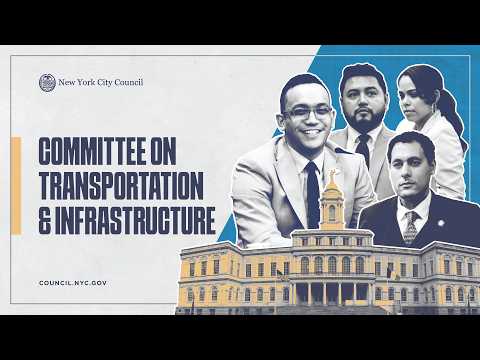
The New York City Council’s Committee on Transportation and Infrastructure convened an oversight hearing on the Streets Plan update, pressing the Department of Transportation on missed 2025 benchmarks and a slate of bills on bike parking, solar‑powered crosswalks, bilingual signs and outdoor dining.
Majority Leader Sha Breu opened the hearing by saying the committee would “examine Department of Transportation’s latest progress in implementing the Streets Plan” and would hold the agency accountable for its statutory benchmarks. “Today marks a turning point in the streets plan,” Breu told the room, framing the session as the start of renewed scrutiny under the new administration.
DOT Commissioner Michael Flynn told the committee the agency is “ready for the challenges” and urged the council to judge the next master plan by measurable results rather than raw mileage. Flynn cited reductions in traffic deaths since Vision Zero and listed recent projects, while acknowledging the agency fell short of some legal targets in 2025. “Traffic fatalities are down 31% since the launch of Vision Zero,” Flynn said in testimony, and he described a program of resumed street redesigns, new bus lanes and pedestrian plazas.
Numbers from DOT showed progress in some areas and gaps in others: the agency reported 18.2 miles of protected bike lanes installed in 2025 against a 50‑mile statutory target and 20.8 miles of bus lanes against a 30‑mile legal requirement. Council members pressed DOT to explain the shortfalls and to provide precise staffing and budget forecasts to meet the law next year. Commissioner Flynn said the department views the plan’s benchmarks as binding and that it is building capacity — hiring planners, engineers and contractors — to increase output, but he did not commit to an exact miles figure for 2026 at the hearing.
Panelists and advocates urged rapid, outcome‑oriented delivery of measures that most affect daily commutes: dedicated, protected bus lanes and a connected protected‑bike network. “Buses stuck in traffic every day interfere with our daily lives,” said Abby Jurro of Riders Alliance, asking DOT to speed buses citywide. Transit advocates and rider groups pressed for a 20% bus‑speed improvement and argued that enforcement of bus lanes and physically protected corridors remain essential.
The hearing also featured an extended policy fight over outdoor dining legislation. Council Member Wrestler, sponsor of bills to restore year‑round outdoor dining and add pedestrian space, said easing seasonal burdens would help small businesses: the cost and logistics of dismantling and storing pavement structures are often prohibitive. DOT acknowledged those economic concerns while flagging operational and safety constraints: winterization, sanitation, snow‑removal logistics, and potential conflicts with emergency access must be resolved before approving year‑round roadway cafes citywide.
Hundreds of public commenters — in person and online — made the case on both sides. Small‑business advocates and hospitality groups argued the permanent program allowed many restaurants to survive and said streamlined, year‑round rules would bring back thousands of shuttered establishments. Worker groups and labor advocates called for a labor condition tied to expansion, proposing a full minimum wage with tips on top if the city grants businesses more public space.
But residents and block associations across Manhattan, Brooklyn and Queens warned of negative quality‑of‑life outcomes: noise late into the night, garbage and rodent infestations, obstructed sidewalks, and complications for winter snow removal and for emergency access. “The sidewalks are no longer navigable for two‑thirds of the year,” one local resident testified, urging the council not to “privatize public streets” without enforceable rules and resources to police them.
DOT also raised technical policy and legal issues for other proposals before the committee: it expressed caution about a large, prescriptive rollout of solar in‑road crosswalk devices (Intro 13), citing mixed evidence and Federal MUTCD (Manual on Uniform Traffic Control Devices) limitations, and emphasized the need to pair speed‑limit reductions (Sammy’s law) with physical street redesigns for effectiveness.
What’s next: DOT said it will finalize the 2026 Streets Plan with a renewed emphasis on measurable outcomes — bus speeds, reduction in deaths and serious injuries, equitable distribution of pedestrian space, and “shovels in the ground” projects. The committee signaled it will press for a clearer budget and headcount plan at the preliminary budget hearing to ensure the agency can meet legal obligations and the council’s expectations.
“Ambition alone is not strategy,” Flynn said. The council’s challenge now is to turn the administration’s rhetorical commitment into funded staffing, clearer timelines, and enforceable rules for contentious items such as year‑round outdoor dining and daylighting interventions — so that the Streets Plan benefits riders, pedestrians and neighborhoods equitably.
The committee is expected to follow up with a preliminary budget hearing and continued oversight of DOT’s 2026 implementation plan.