Get Full Government Meeting Transcripts, Videos, & Alerts Forever!
Get email alerts on the Education Funding topic
No spam. Unsubscribe anytime.
Guam charter schools ask Legislature for $500 per‑student boost and higher enrollment caps
Summary
Representatives of Guam’s seven charter schools told the Legislature’s finance committee on April 10, 2026, that rising costs and program growth require raising the per‑pupil allocation from $7,800 to $8,300 and increasing enrollment caps to meet waiting‑list demand; no vote was taken.
Representatives of Guam’s seven public charter schools asked the Committee on Finance and Government Operations on April 10 to raise the per‑pupil funding rate from $7,800 to $8,300 and to lift enrollment caps for schools with documented waiting lists.
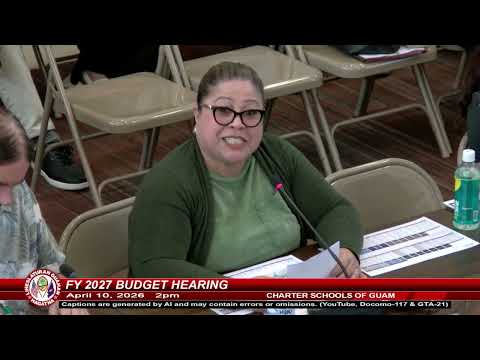
The request was presented by Evangeline Seda, chair of the Guam Academy Charter School Council, who said the $500 increase is a “modest adjustment” tied to rising operating costs, statutory compliance requirements and teacher retention pressures. “Sustaining these gains requires competitive instructional materials and datadriven support,” Seda said, urging senators to consider the increase to preserve student achievement gains.
Why it matters: The requested increase would flow directly to operating budgets for curriculum, specialized instructors, insurance and facility needs at the island’s seven charters. School leaders said the boost is necessary to retain teachers paid more in other sectors, to reduce per‑student resource gaps and to accommodate expanding programs — including STEM, immersion language instruction and career‑technical pathways.
What the schools said: Speakers from individual schools provided classroom‑level examples. Anne Margaret Santiago of Guam Academy told senators she serves a largely low‑income student population and described students who advanced multiple grade levels following targeted interventions, and she urged the committee to approve the per‑pupil increase to support a compliant cafeteria and a gym for safer, less disruptive programming. Helen Nishihira of Island Academy cited a waiting list and steady kindergarten enrollment that, she said, justify a higher enrollment cap. Michael Phillips of Mount Carmel highlighted two recent clean audits but said procurement and Department of Administration (DOA) payment processes have constrained cash flow. Anthony Sunga of CIFA/SEIFA emphasized growth in STEM and robotics and described a proposed industry‑grade ‘MIRROR’ program tied to workforce priorities.
Accountability and payments: Multiple presenters emphasized audit compliance. Seda and school officials said charters submit payment invoices to DOA and often experience a multi‑month lag between invoice submission and payment, which contributes to reported lapses and payable‑records. Panelists also said some FEMA or other reimbursements for typhoon repairs have been approved but not yet dispersed to schools, creating temporary cash‑flow pressure.
Facilities and caps: Several schools are operating at or near capacity and described plans to expand facilities. Schools seeking cap increases said they already manage waiting lists and intend to expand carefully; some noted ongoing procurement or lease negotiations for new sites. One school cited current lease costs for temporary facilities and the need for long‑term, compliant campuses to host cafeterias, gyms and program spaces.
Performance measurement: Senators asked about academic measurement. Schools reported using a mix of district assessments (Smarter Balanced / DWA), college‑placement tools (e.g., ACCUPLACER), commercial diagnostics and curriculum‑aligned internal measures. Leaders said they post end‑of‑year data and use third‑party platforms for progress monitoring, but also cautioned that standardized instruments must be aligned to their curricula and mission (for example, immersion programs need culturally grounded measures).
Committee context and next steps: Chair Senator Christopher M. Duenius acknowledged the charters’ performance claims, noted prior authorized funding levels and lapses, and said the committee will consider the governor’s budget (which closely mirrors the request). The chair closed the hearing and said written testimony will remain open; the committee plans a seven‑day closure before taking final action on Bill 266‑38. No formal vote occurred during the hearing.
What remains unresolved: Senators pressed for precise numbers on outstanding appropriations, the timing of DOA payouts, and the status of specific facility procurements. Panelists committed to providing enrollment origin data (previous school), audit documentation and other requested paperwork to the committee. The budget decision and any statutory cap changes remain subject to follow‑up hearings and committee negotiations.