Get Full Government Meeting Transcripts, Videos, & Alerts Forever!
Get email alerts on the Police Technology topic
No spam. Unsubscribe anytime.
Muncie council tables proposed municipal drone base after hours of public questions on policy, privacy and cost
Summary
Council members tabled Resolution 4-26, an interlocal agreement to host and power a municipal drone base at the county building, after lengthy questioning of Munie (Muncie) Police officials and extended public comment about privacy, policy and budget details.
The Muncie Common Council on March 2 voted to table Resolution 4-26, which would have authorized an interlocal agreement to house and operate a municipal drone base at the county building. The proposal was prompted by police leaders who said a single, charged drone kept at a fixed base would improve rapid response for missing-person searches, crash documentation and tactical operations.
Chief Sloan of the Muncie Police Department and Detective Sergeant Chris Swanson detailed operational uses and said the department already operates drones and aims to ensure one is always charged and ready. "Muncie police will retain all of that stuff," Chief Sloan said when asked who would own footage; he said the department plans to store video in its existing evidence platform.
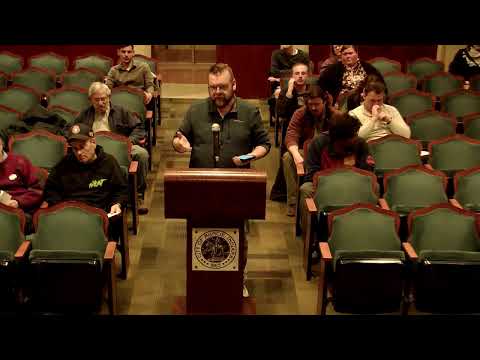
But the public and several council members pressed for written policy and financial clarity. Residents raised civil-liberties objections and asked whether vendors could access footage, whether facial recognition would be used and how often drones are deployed. "This kind of mass surveillance is so normalized at this point that it's scary," said resident Tanya Pearson, who urged investment in social services instead of expanded surveillance.
Council members repeatedly requested written drone-use policies and cost estimates before approving the housing agreement. The council debated an amendment to require that all costs come from the Police Department's fund 106; however, that change would have altered an interlocal agreement and was not in order. Ultimately the council voted to table the resolution and referred drone-use and policy questions to the public services committee for further review.
Why it matters: The proposal touches on privacy, public-safety readiness and municipal budgeting. Police leaders emphasized operational advantages for time-sensitive searches and evidence collection; critics said broader civil-rights safeguards — written policy on deployments, data retention and prohibitions on facial recognition — must be in place before approving infrastructure to make drones more readily available.
Next steps: The council asked staff to provide written drone policies and a cost estimate and sent the matter to the public services committee for follow-up. The resolution was tabled at council direction pending further information.