Get Full Government Meeting Transcripts, Videos, & Alerts Forever!
Get email alerts on the Virtual Learning topic
No spam. Unsubscribe anytime.
Lapeer schools report 79% pass rate for virtual courses, outline plan to build district-made online curriculum
Summary
District presenters told the Lapeer Community Schools board that 79% of students taking at least three virtual classes passed in the first semester and described steps — from Ruby Payne PD to an in-house LMS — intended to raise that completion rate and reduce reliance on outside vendors.
Lapeer Community Schools officials told the school board that students participating in the district’s virtual programs achieved a 79% pass rate in the first semester, and they outlined steps the district is taking to raise that benchmark.
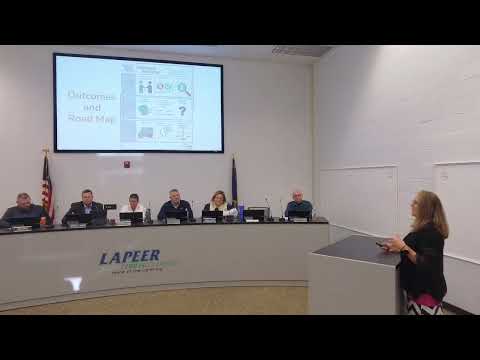
Presenter Chad Skilski, describing benchmark 1.2D, said the district has different virtual program models — full-time virtual enrollment, alternative/CFI programs with face-to-face mentors, one-off virtual electives at the high school, and a partnership program for homeschoolers — and reported, “79% are passing.” He said the district is considering increasing next year’s completion goal from 80% to 85%.
The presenters said growth in virtual enrollment has been substantial. Skilski said the district now serves hundreds of students through virtual offerings, credit recovery and partnership programs, and credited staff outreach and program development for the rise.
Why it matters: district leaders said building stronger, more tailored online instruction could raise achievement and save costs tied to third-party vendors. Sarah Taylor described professional development based on Ruby Payne’s framework that aims to help staff better understand the nonfinancial resources and ‘‘hidden rules’’ that shape students’ school engagement. Katie Edwards said the district has begun building its own courses in an in-house learning management system so staff can correct errors and tailor lessons immediately.
District intervention work for earlier grades also supports the online effort. Michon described elementary reading-recovery groups, a new math-recovery hour and drop-in tutoring for grades 8–12 as targeted supports designed to make students more successful in blended and online coursework.
Voices from the program: two seniors from the CFI alternative program described a smaller, relationship-driven environment that helped them recover credits and prepare for college. One student said she came to CFI with ‘‘absolutely zero credit’’ and credited staff support for helping her enroll in postsecondary nursing programs.
Next steps: presenters asked the board to consider a higher completion target and continue support for in-district curriculum work. No new policies or budget changes were approved at the meeting; presenters said additional planning and implementation work will continue with district staff.