Get Full Government Meeting Transcripts, Videos, & Alerts Forever!
Get email alerts on the Environment Water topic
No spam. Unsubscribe anytime.
Warner's Pond committee embraces adaptive-management approach, defers operating-protocol vote
Summary
The Warner's Pond Management Committee reviewed a state pond-management guide and endorsed developing measurable, high‑level ecological and recreational goals before hiring a consultant. Members declined to adopt an extra operating-protocol affirmation after some said it was redundant.
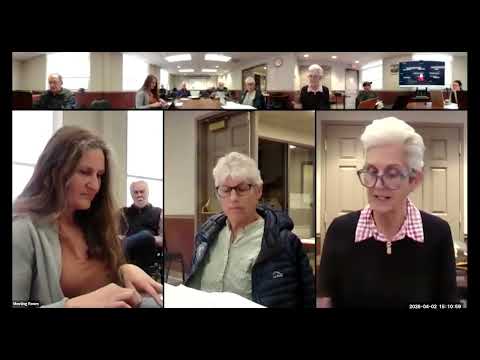
The Warner's Pond Management Committee advanced planning for an adaptive pond-management program and decided not to proceed with a separate operating-protocol affirmation, the committee agreed in a lengthy Tuesday meeting.
Dan, a committee member who presented the plan, said the adaptive approach is "an iterative process" that tests methods on a pilot scale, monitors results and expands or changes tactics based on data. He said the method reduces large-scale financial risk while acknowledging the work may take "five to six years" to demonstrate program-level success.
Committee members spent much of the meeting discussing what the committee must deliver before hiring a pond-management consultant: a concise set of high-level goals that reflect community priorities and measurable objectives the consultant can translate into methods, monitoring and metrics. One example offered was "to provide safe, accessible paddling within the eastern portion of the pond with several defined landing and departure points," a working high-level goal described during the discussion.
On whether to adopt an operating-protocol affirmation — a short pledge intended to reassure the public and articulate committee norms — members were sharply divided. Several argued the pledge would be redundant because members had already signed ethics acknowledgements and the committee operates under established town guidance. After back-and-forth debate, the chair "let it drop," saying a formal vote would risk creating a visible split on the committee.
The committee reviewed the Massachusetts guidance on pond and lake management and agreed the group would likely limit its work to methods recognized in that guidance, noting some methods will require permits. Dan and others identified two near-term technical gaps: a narrower set of water-quality laboratory tests and recent biota surveys. Committee members said a consultant could be asked to evaluate whether additional sampling is needed.
Members agreed on several near-term steps: assemble a short list of stakeholders to invite (recreation department staff, the scouts, DPW, Friends of Warner's Pond and others), draft a preliminary Gantt-style schedule for consultant procurement and project milestones, and collect low-cost baseline data this season (for example, aerial imagery and volunteer water testing) that can serve as before/after comparisons.
"Stakeholder outreach is a key starting point," a committee member said, but several members urged the committee itself draft high-level goals to present at outreach meetings so conversations would be focused and productive. The group discussed meeting formats (targeted invited stakeholder roundtables versus larger public sessions) and agreed to prepare short, readable briefing materials for invitees.
Assignments for next steps were made: two members will compile a stakeholder list and contacts and one member volunteered to draft a project Gantt chart and schedule. The committee tentatively set its next regular meeting for June 4 at 3 p.m. and discussed the possibility of a Zoom meeting in July to accommodate summer schedules.
A committee member also publicly repudiated an anonymously distributed website that criticized a prior committee and included photos of current and former members, calling the material "bullying and harassing" and unrelated to the committee's work. Members expressed a desire to move the group forward on the technical work.
The committee did not take formal votes on new policy or interventions in the pond at the meeting; instead it focused on scoping, outreach, and timelines that will inform an RFP for a pond-management consultant. The meeting adjourned after members confirmed assignments and near-term tasks.