Get Full Government Meeting Transcripts, Videos, & Alerts Forever!
Get email alerts on the Sales Tax Distribution topic
No spam. Unsubscribe anytime.
Lincoln County and Lincolnton officials spar over change to sales-tax distribution
Summary
At a joint meeting, Lincoln County commissioners defended shifting the state sales-tax distribution toward an ad valorem (property tax) method and outlined fee waivers and service concessions to soften impact; Lincolnton officials said the timing left the city little time to avoid personnel cuts and asked for a phased approach.
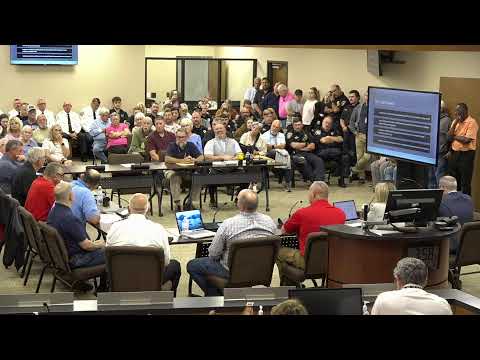
A joint meeting of the Lincoln County Board of Commissioners and the Lincoln City Council on the countys review of state sales-tax distribution focused on whether a move to an ad valorem methodology should be implemented immediately and how to mitigate its effects on the city.
The countys chair opened the discussion by citing state law that requires the county to set distribution methodology each April and said the county had not reviewed the method in roughly two decades. The chair said the county began looking at alternatives after residents raised equity concerns tied to demographic shifts.
Mayor (Lincoln City Council) told commissioners the change arrived too late in the citys budget cycle. "It may be legal, but it's not right," the mayor said, arguing the city's budget was already prepared and that sudden changes would force personnel and service cuts. City council members asked for concrete offset proposals and suggested a multi-year phase-in rather than immediate implementation.
County commissioners and staff described a set of proposed concessions intended to reduce the near-term harm to the city. A county commissioner said the county could waive roughly $427,839 in fees for the year and would absorb an estimated $550,000 differential tied to the proposal; the county also offered to share part of the sales-tax shortfall to buffer the city while longer-term negotiations continue. The county framed those concessions as part of a "master agreement" that would put longstanding verbal exchanges into a formal, public document.
City and county staff discussed budget mechanics in detail: personnel costs account for a large share of the citys general fund, the citys fund balance had grown in the past fiscal year but many projects are already budgeted, and the city supplements public-safety programs such as school resource officers. County staff estimated SRO-related savings in one scenario at roughly $110,000; another figure cited in the meeting was $125,000, depending on how months and responsibilities are allocated.
Commissioners emphasized broader county responsibilities, saying substantial portions of sales-tax revenue are constrained by existing obligations to schools and capital projects. One commissioner cited "Article 40" and "Article 42" as drivers that allocate a large share of revenue to school debt and school systems, reducing the amount available for discretionary county purposes.
City council members urged the county to reconsider timing or adopt a multi-year transition, pointing to other jurisdictions that phased similar changes to allow local governments to adjust. The county said the decision was made after reviewing demographic and fiscal trends and pending state-level actions affecting property-tax rules, but several commissioners said the door was open for continued negotiations.
No formal change to the distribution methodology was adopted at the meeting. The boards agreed to keep discussing the proposals, and the joint meeting was adjourned after a verbal vote.
What happens next: county and city staff are expected to continue planning discussions and to refine the written concessions and any phased timeline; no formal resolution or ordinance was adopted during the session.