Get Full Government Meeting Transcripts, Videos, & Alerts Forever!
Get email alerts on the Zoning Rezoning topic
No spam. Unsubscribe anytime.
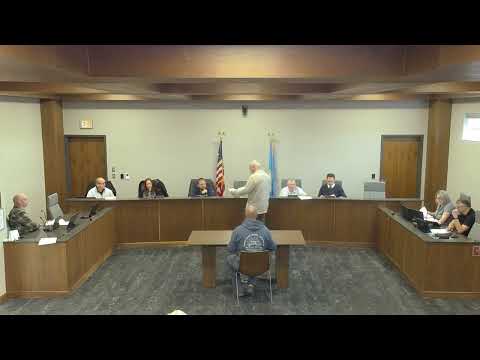
Commission denies rezoning request for Windsor Estates after residents cite drainage, traffic and property-value concerns
Summary
The Madison City Commission voted to deny first reading of Ordinance 1686, a developer request to rezone parts of Windsor Estates from R90 to R60, after residents testified about incomplete storm drainage, increased traffic and threats to neighborhood character; the developer may pursue conditional-use approvals instead.
The Madison City Commission on April 6 denied first reading of Ordinance 1686, a developer-led request to rezone portions of Windsor Estates from R90 (single-family) to R60 (allowing duplexes, triplexes and up to four-unit buildings), after residents raised concerns about drainage, traffic and property values.
Planning staff explained the request and said the city’s adopted comprehensive land-use plan (April 4, 2022) identifies the area as appropriate for low-density residential development and that staff were divided on the application. "Staff are kind of divided on this request," a city planner said, noting that a rezoning to R60 would change principal permitted uses from single-family homes to allow duplexes without a conditional-use review.
Developer representative Stephen Peterson told the commission the concept plan in the packet would add "approximately five doors" compared with the existing R90 layout and would reconfigure streets to improve traffic flow by connecting Fourth Street to Third Street. Peterson said some of the proposed new road and lot layout could enable future connectivity and remove existing cul-de-sacs.
Nearby homeowners pushed back. "We purchased that because primarily we knew it was going to be a single-family housing area," resident Tom Ferrell told the commission, saying the neighborhood’s character and expectations would change if multifamily units were permitted. Resident Janice Daling emphasized drainage problems and safety: "If someone's going to put something in there, it needs to be a significant improvement" to the unfinished storm system that currently drains across yards, she said.
Other residents described worries about parking, traffic and resale values if multifamily units were added. A city staff member confirmed the final development plan adopted in 2007 presupposed additional infrastructure that has not been constructed, leaving drainage easements incomplete.
Commissioners discussed trade-offs between completing long-stalled infrastructure and protecting established single-family neighborhoods. Multiple commissioners said they were sympathetic to both the developer’s interest in finishing the area and to homeowners’ concerns about spot zoning, stormwater capacity and neighborhood character. The planning commission had reviewed the reszone application and recommended against it at its March 10 meeting.
Rather than approve the blanket change to R60 requested in the ordinance, the commission voted to deny the ordinance as presented. The denial preserves existing R90 zoning across the area; the developer may pursue conditional-use approvals under R90 (for duplexes, triplexes or four-unit buildings) or revise and resubmit a substantially different rezoning application.
What happens next: A developer may apply to the planning commission for conditional-use approvals that would be considered case by case, where planning staff and the planning commission could require street and drainage improvements as conditions of approval. The commission encouraged the developer to continue discussions with neighbors and with city staff to identify a plan acceptable to both sides.