Get Full Government Meeting Transcripts, Videos, & Alerts Forever!
Get email alerts on the Bank Capital topic
No spam. Unsubscribe anytime.
CFTC advisory committee debates large-bank capital proposals and possible impact on commodity clearing
Summary
At a CFTC EMAC meeting in Kansas City, policy experts backed Basel III "endgame" capital proposals to strengthen bank balance sheets and better capture derivatives exposures, while exchanges and clearing members warned higher capital could raise clearing costs and reduce end-user hedging and liquidity.
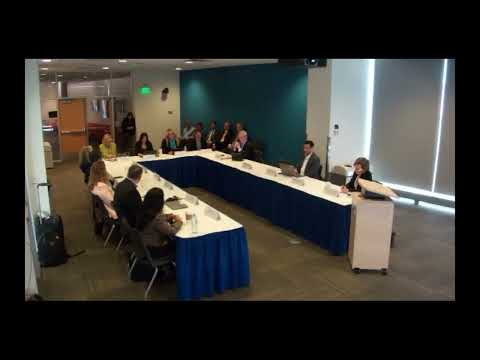
Commissioner Dina Wiggins convened the Energy and Environmental Markets Advisory Committee (EMAC) of the Commodity Futures Trading Commission in Kansas City where panelists debated proposed capital-rule changes intended to shore up large banks and reduce systemic risk.
Alexa Foo, policy director at Americans for Financial Reform, told the committee the Basel III endgame and related proposals would "increase big banks' balance sheet strength and financial system resilience," including by raising capital for derivatives exposures and improving the risk sensitivity of credit valuation adjustments (CVA). She said the rules would "require the largest banks to hold more capital for their actual risk-taking" and described the changes as insurance against repeat severe crises: "No one wants to go through the 2008 crisis again," Foo said.
Foo and other public-interest witnesses argued the proposals close gaps that have left cross-border derivatives and certain OTC activity undercounted in systemic-risk metrics. They recommended keeping the principal elements intact while allowing limited, targeted adjustments.
Industry representatives and exchanges pressed back in a multi-hour Q&A, saying the rules could raise the marginal cost of cleared transactions, concentrate clearing activity, and reduce liquidity. John Murphy and Rob Kramer (commodity market participants) described how higher per-contract capital or margin can make hedging less attractive for some end users and may force activity off centralized clearing venues, reintroducing bilateral "daisy-chain" counterparty risk. Several clearing members and exchanges cautioned that if major clearing firms found clearing uneconomic, that could reduce access to netting, transparency and third-party monitoring that central clearing provides.
Speakers acknowledged trade-offs. Foo and supporters said the proposals would raise loss-absorbing capacity and strengthen CCP counterparties; opponents said regulators should weigh the impact on commodity hedging costs and on smaller, nonbank clearing firms. Participants suggested further agency study on the distributional effects across product sets (commodities vs. fixed-income) and recommended careful tailoring to avoid unintended market exits.
The committee did not take a vote; members requested further analysis and follow-up on: the relationship between clearing fees and market liquidity, product-level impacts (especially for commodity contracts), and differentiated policy options for OTC versus centrally cleared instruments. EMAC staff said subcommittee reports and additional materials will be circulated for comment ahead of a future meeting.