Get Full Government Meeting Transcripts, Videos, & Alerts Forever!
Get email alerts on the Weed Control And Pesticide Programs topic
No spam. Unsubscribe anytime.
Oliver County weed board schedules March 18 interviews and plans cost‑share pesticide program
Summary
The Oliver County Weed Board set candidate interviews for March 18 and adopted a regular meeting schedule; members discussed certification requirements, storage rules and order logistics for a county cost‑share pesticide program and assigned follow‑up steps.
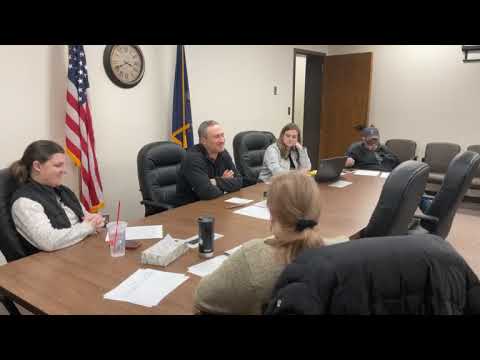
Oliver County — The Oliver County Weed Board set candidate interviews for the county’s vacant weed control officer post and moved forward on planning a cost‑share pesticide program, the board said at its Feb. 17 meeting.
Board members agreed to hold interviews and, if appropriate, make a selection on March 18 at 2:30 p.m., and they voted to schedule regular monthly meetings on the third Wednesday at 3:30 p.m. for 2026 to simplify planning and office support.
The meeting focused largely on two connected issues: filling the weed control officer role and standing up a cost‑share program to distribute agricultural chemicals. Members said one applicant had withdrawn and that Human Resources requires all remaining candidates be interviewed before a selection can be made. The board discussed whether a current candidate who also operates a spraying business could create a conflict if that person were later authorized to arrange spray services; members said the control officer’s role is primarily investigative and that the board, not the officer, would authorize fines or further enforcement action.
On the cost‑share program, a board member who recently renewed a commercial applicator’s license briefed the group on changing certification rules and endorsement requirements. The board noted that, under new rules discussed at the meeting, only licensed applicators may legally distribute certain chemicals and that, at present, only one board member holds the required certification. The board discussed options to encourage more members to obtain certification so distribution duties could be shared.
Members considered operational details for a program that would accept orders and provide pick‑up or delivery of chemicals. They discussed storage requirements — including climate‑controlled containers and containment pallets that meet state specifications — and whether to place two seasonal orders rather than one to minimize leftover inventory. Wilbur Ellis was named as the long‑time supplier the board has used; members said they would seek at least one other bid as required by past practice.
The board debated charging a delivery fee to discourage small deliveries and promote pickup; sample figures of $100–$150 were raised as possible deterrents though no final fee was adopted. The group also agreed to implement an inventory and order system, asking county IT staff (referenced in the meeting as Jaden) to help set up a shared email and an order tracking spreadsheet. A board member was asked to contact suppliers and check the inventory program ahead of the next meeting so the order letter could go out by late March or early April.
What happens next: the board will interview candidates on March 18 and may make an offer that day if interviews yield a willing candidate. Staff were asked to set up a shared email and to prepare an order letter; decisions about delivery fees and long‑term storage will depend in part on who is hired as weed control officer and on bids from distributors.