Get Full Government Meeting Transcripts, Videos, & Alerts Forever!
Get email alerts on the Clean Cooking topic
No spam. Unsubscribe anytime.
Secretary Wright urges scaling clean cooking through entrepreneurs, policy reforms and Mission 300
Summary
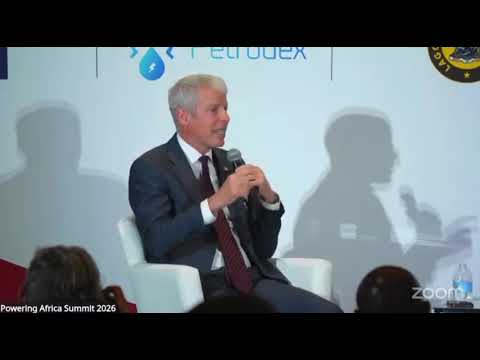
U.S. Secretary of Energy Wright told an energy summit that shifting households from traditional fuels to clean cooking fuels is the single highest-impact step to reduce energy poverty in Africa and argued that scaling must be driven by entrepreneurs, supportive regulation and public-private finance.
At an energy summit, U.S. Secretary of Energy Wright said accelerating access to clean cooking fuels should be a central objective of U.S. Africa policy and Mission 300, and he urged private-sector expansion, regulatory reform and targeted philanthropic finance to make it happen.
Wright told moderator Rajiv Shah that his interest in fighting poverty dates to a childhood experience and a long career in energy. “The biggest single step is the transformation from traditional fuels to clean cooking fuels,” Wright said, arguing that scaling clean cooking delivers outsized social benefits for relatively modest investment.
Wright described the scaling challenge as largely logistical. “It’s a logistics problem,” he said, adding that success will require “lots of small businesses, lots of entrepreneurs” plus governments that make it straightforward to register and operate businesses, protect invested capital and avoid stifling regulation.
The secretary linked the Clean Cooking Accelerator to the broader Mission 300 initiative and said compacts from African leaders—now more than 30—lay out the policy reforms needed to draw private capital. “Since September of 2024…44 million new connections have been brought to bear as a result of that effort,” Wright said, and he noted philanthropic contributions, citing the Rockefeller Foundation and the Global Energy Alliance as providing more than $100 million in catalytic funding.
Wright urged blended approaches that combine philanthropy, public-sector policy changes and private investment. He said traditional one-way foreign aid often failed to create the institutions and market conditions needed for durable progress and that public-private partnerships can be more effective at drawing capital and scaling enterprises.
On technology, Wright highlighted solar, energy storage and geothermal as options that can serve off-grid and remote applications in Africa, and he recommended that countries develop resources that fit local conditions. He also pointed to U.S. examples—including Alaska, Hawaii and Puerto Rico—where hybrid systems that pair renewables with dispatchable generation or shipping fuel can lower costs and improve reliability.
Wright also addressed broader energy-policy tradeoffs. Speaking about recent U.S. decisions, he said the administration kept “17 gigawatts of coal plants open” to maintain resilience during an extreme cold snap, saying that closing them earlier would have risked life-threatening outages.
Wright concluded by urging partners to integrate clean cooking into Mission 300 goals and to pursue measurable “on-the-ground wins” in the coming year, framing the effort as a practical, business-driven push that depends on receptive host-country policies and sustained finance.