Get Full Government Meeting Transcripts, Videos, & Alerts Forever!
Get email alerts on the Identity Fraud Ai Deepfakes topic
No spam. Unsubscribe anytime.
Committee advances identity-fraud and deep-fake bill after extended debate over penalties and scope
Summary
The committee approved Senate Bill 8, which modernizes identity-fraud law to cover AI and deep-fake representations; members debated whether the statute's "cause harm" language and felony penalties overlap with existing revenge-porn deep-fake provisions and whether penalties should be tiered by harm type.
The Judiciary Committee voted to advance Senate Bill 8, a criminal-law update aimed at covering identity fraud carried out using artificial intelligence and deep-fake representations.
The bill drew extended debate over the statute's scope and penalties. Several members questioned whether the bill's language'particularly provisions that criminalize conduct that "causes harm to another person"'was too broad. "I do not love ... where on line 16 it says serious emotional distress. That is not ... it's too broad," one member said, expressing concern that the phrase could criminalize hurt feelings.
Sponsors and supporters pointed to an intent requirement in portions of the bill that would require proof the defendant acted "knowingly, willfully or with fraudulent intent" to cause harm, which they said narrows prosecutorial reach. "The person may not knowingly, willfully or with fraudulent intent utilize the information without the consent of the individual in order to cause harm," a sponsor said, noting that proving intent narrows the scope of prosecutions.
Members contrasted the measure with an existing statute that addresses revenge-porn and deep-fake pornography, which carries misdemeanor penalties. "When we did the deep fake pornography [statute] ... that was a two-year misdemeanor," one delegate said. Lawmakers debated whether the new bill's felony tiers (including up to five years and enhanced penalties for multiple victims) would create inconsistent penalties for behavior that can be similar in harm.
The state prosecutor's testimony was cited to justify higher penalties, including the time and resources required to investigate deep fakes and the serious adverse ramifications such technology can cause. "Discovering who committed the act often takes more than a year by the time the data is analyzed," a committee member read from the prosecutor's testimony.
Several members proposed narrowing the bill by removing a broadly phrased "cause harm" clause and retaining clear identity- and fraud-related offenses (for example, inducing another to provide personally identifying information or obtaining a benefit by deception). Others said the bill contains tiers that begin with misdemeanor-level penalties and escalate to felonies where conduct involves aggregated benefits or multiple victims.
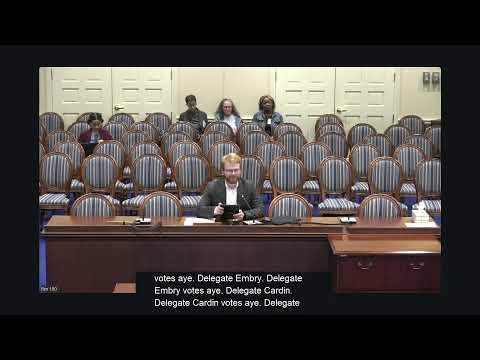
After debate, the committee invoked the previous question and held a roll-call vote; the clerk announced the motion carried.
What happens next: The bill was reported favorably out of committee and will proceed in the legislative process; lawmakers signaled a willingness to revisit statutory alignment and penalties at a later stage if needed.