Get Full Government Meeting Transcripts, Videos, & Alerts Forever!
Get email alerts on the Healthcare topic
No spam. Unsubscribe anytime.
Senator proposes federally prefunded flexible spending accounts as alternative to premium tax credits
Summary
A senator proposed replacing enhanced premium tax credits with federally prefunded flexible spending accounts that would go directly to patients to pay deductibles, prescriptions, dental and vision care, arguing the change would empower consumers and reduce insurer-driven cost inflation.
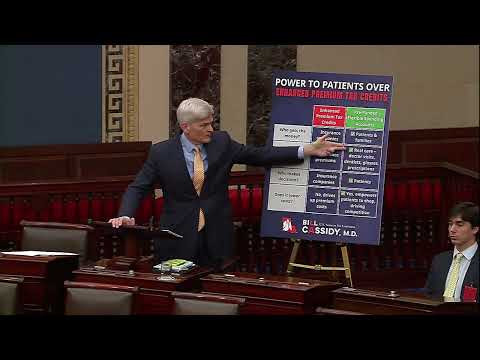
On the Senate floor, a senator proposed substituting the enhanced premium tax credit with federally prefunded flexible spending accounts to address health-care affordability and to try to break a government shutdown impasse.
The senator framed the proposal as a practical alternative to sending subsidies to insurers. He said the current enhanced premium tax credit effectively routes roughly $26 billion to insurers next year and argued that model leaves no market incentive to lower health-care prices. “The enhanced premium tax credit does not empower patients. It enriches insurance companies,” the senator said.
The proposal would place the federal subsidy into a prefunded flexible spending account (FSA) of approximately the same value that the enrollee would otherwise receive under the enhanced premium tax credit. The senator described the account as federal money, not a payroll deduction, that beneficiaries could use for real-world expenses — deductibles, co-pays, dental, orthodontia, eyeglasses, prescriptions and medical supplies — but not to pay insurance premiums.
The senator said the mechanism is already familiar and administratively plausible: “72% of Americans getting their health care through some government entity are offered federal-style flexible savings accounts. 47% of people getting insurance through their employer are offered FSAs,” he said, arguing the Treasury already has offices that administer similar accounts for federal employees and small-business exchanges.
He contrasted the two approaches: under the premium tax credit, insurers receive the subsidy and insurers decide covered services and payments; under the proposed prefunded FSA, patients would control spending and be able to shop for lower cash prices. “If you give people something that they perceive as their own money, they hunt for that bargain,” the senator said, adding that consumer choices could lower costs for both families and taxpayers.
The senator acknowledged the first-year federal cost would be roughly equal to the premium tax credit but maintained the change would produce better value over time by shifting spending to care people actually use and by reducing administrative overhead he estimated can account for up to 20% of current subsidy value.
He also urged colleagues to move beyond partisan standoffs and to write legislation: the proposal, he said, would require congressional action and administrative setup to implement, and he urged using existing administrative pathways to try to reach an implementation target in coming years. He concluded with an appeal to end what he called “writing blank checks to insurance companies” and to “trust our fellow Americans to pay for their care directly at fair prices with transparency.”
The senator did not present draft legislation in this remarks, and no formal motion or vote on the proposal occurred during the address.