Get Full Government Meeting Transcripts, Videos, & Alerts Forever!
Get email alerts on the Alpr Flock topic
No spam. Unsubscribe anytime.
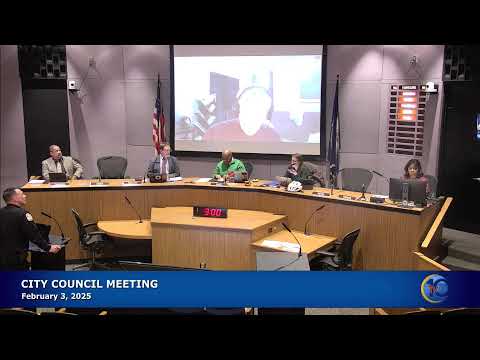
Council hears update on Flock ALPR program; police stress seven-day retention and monthly audits
Summary
Police briefed council on the Flock ALPR system, saying Charlottesville's policy uses a seven-day retention period, restricts system access to Virginia law enforcement, requires case numbers for searches and mandates monthly audits; officials cited dozen-plus investigative uses.
Charlottesville Police Chief Cotes updated the council on the city's Flock automated license-plate reader (ALPR) system, describing policy safeguards, audit procedures and the system's investigative uses.
Chief Cotes said the city has 10 Flock camera sites and that the department's policy sets a seven-day data-retention period "the shortest within the Commonwealth of Virginia." He said policy language makes clear that an ALPR alert "does not create Reasonable Suspicion to justify a traffic stop or a detention; the officer must develop independent Reasonable Suspicion." The department also maintains a public transparency portal with retention statistics, alert counts and a link to the policy and contract.
Officials said the ALPR contract was reviewed by the city attorney and city manager and that all sworn staff and relevant auditing staff completed required criminal-justice information-systems training (CJIS/SIES). The Police Civilian Oversight Board executive director was granted access to supporting systems required to audit ALPR use, including the records-management and body-camera systems, to enable verification of searches and related stops.
Chief Cotes described several investigative outcomes attributed to the ALPR system: multiple stolen-vehicle recoveries, identifications linked to shootings and the location of a missing child who was not in harm's way. He said ALPR data had helped identify vehicles traveling from Charlottesville to other regions and provided timely leads that shortened investigations.
When asked about state-level draft legislation, the chief said the draft allows up to 30 days of retention but that Charlottesville's seven-day policy is more restrictive; he said the local policy "meets or exceeds" the draft bill's guard rails and that the city's policy will withstand state scrutiny. Council members noted that county roads are state-maintained and that the county currently lacks ALPRs on those state roads.
Council member Lloyd raised civil-liberties concerns. "I've been curious and concerned from the Civil libertarian perspective," he said; Chief Cotes responded that monthly audits, required case numbers for searches and restricted retention are protective measures. Several council members expressed cautious support for continuing the system pending financial appropriation later in the budget process.
No formal council vote was taken on ALPR during the work session; council members indicated there was no current objection to continuing use while scheduling and budget questions are resolved.