Get Full Government Meeting Transcripts, Videos, & Alerts Forever!
Get email alerts on the Project Safe Neighborhood topic
No spam. Unsubscribe anytime.
City officials brief council on Project SAFE Neighborhood, focus on call-ins and youth supports
Summary
City and university partners outlined Project SAFE Neighborhood's goals, accountability metrics and a focused-deterrence "call-in" approach aimed at roughly 20 high-risk individuals, while emphasizing community engagement and youth programming.
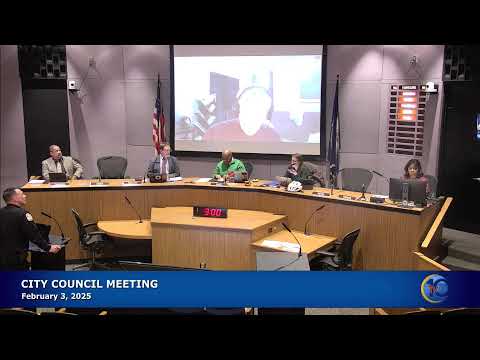
Misty Graves, who serves on the President's Council on UVA Community Partnerships and works for Alamar County Public Schools, and Charlottesville Police Chief Cotes updated the Charlottesville City Council on Project SAFE Neighborhood and the community-safety implementation group's work.
Graves said the working group formed after a spate of gun violence including the November 2022 campus shootings and a reported 30% increase in violent crime from 2021 to 2022. She described a year-long process that distilled more than 20 pages of recommendations into four primary goals: creating protective community environments; enhancing place-based programs and access to care; improving coordination and information flow among community members, service providers, schools and law enforcement; and connecting young people to caring adults and activities.
The implementation group selected three measurable safety metrics to track progress: the number of injuries from gun violence in the region, the number of deaths from gun violence and the chronic-absenteeism rate in Charlottesville City and the adjacent county schools. Graves said the UVA Equity Center has hired a data analyst to support that tracking and maintain public accountability.
Chief Cotes described Project SAFE Neighborhood's operational approach, which blends community engagement, prevention and intervention, strategic enforcement and accountability. Central to the local rollout is a focused-deterrence model that identifies a small set of prolific offenders and invites them to voluntary "call-in" meetings offering services, supports and a clear statement of potential consequences.
"We developed a matrix" to score and rank individuals based on objective criteria such as criminal-history factors and prior involvement in gun incidents, Chief Cotes said. The initial list from analysts was roughly 40 people; after excluding those under investigation, incarcerated or demonstrating a period of good behavior, the working list is "hovering around 20," he said. Facilitators with restorative-practice experience will run the sessions, and officials said they are deliberate about choosing safe, appropriate locations for call-ins and ensuring service capacity before outreach.
Council members asked whether the recent violence stems from discrete sources such as domestic violence, youth "beefs," drug-related activity or other causes. Chief Cotes said recent incidents are primarily petty disputes that escalate because of firearm accessibility and social-media retribution, and that hotspot patterns persist in some areas; the department continues monthly CompStat analysis to identify and target the address- or incident-level causes sustaining hotspots.
Members pressed about school safety; officials said they lacked specific school-incident data in the briefing but believe the situation has improved year-over-year and noted investments from Human Services and school partnerships to support prevention programs, including gender-based group interventions and expanded youth resources.
Speakers emphasized community engagement as core to the program's design: town halls, dialogues, community walks and an online resource for youth activities hosted by the Equity Center are intended to raise awareness and make supports discoverable. Graves said the designation by the U.S. attorney's office can open funding opportunities but that Project SAFE Neighborhood is a partnership and not a single fixed grant with a defined end date.
The presentation closed with officials asking for continued council oversight; they said further updates will be provided as call-ins and program activities proceed.
The council moved to closed session afterward; no legislative action on Project SAFE Neighborhood was taken during the work session.