Get Full Government Meeting Transcripts, Videos, & Alerts Forever!
Get email alerts on the Housing Policy topic
No spam. Unsubscribe anytime.
Planning staff briefs commission on 2026 California housing laws, flags AB130 for local review
Summary
Staff summarized key 2026 state housing laws — including AB130 (CEQA exemptions and 60-day streamlining deadlines with tribal consultation requirements), AB712 and SB786 (penalties for housing compliance failures), and ADU/JDU changes — and told commissioners AB130 will require careful case-by-case review.
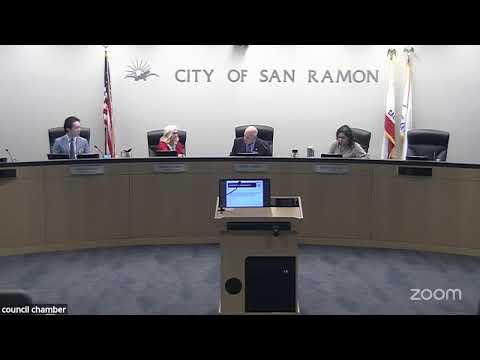
Planning staff presented an overview of recent state housing legislation and its likely effects on local permitting during the March 3 Planning Commission meeting.
Anna Lisa, a city planner, told commissioners the state has continued a multiyear effort to accelerate housing development. She highlighted AB130, which creates a limited exemption from CEQA review for certain urban housing projects that meet size, density, and plan-consistency criteria, and also amends permit-streamlining timelines by setting a 60‑day deadline for ministerial project determinations. She explained AB130 includes tribal notification and consultation steps (tribes must be notified within 14 days after an application is deemed complete and have 60 days to request consultation; consultation must be initiated and concluded within specified windows) and that mitigation is required for sites in very high fire-hazard areas and fault-hazard zones.
Anna Lisa summarized enforcement and penalty provisions under AB712 and SB786, including statutory fines that may be imposed when a local agency is found to violate housing laws; she said courts have tools ranging from fines to suspending permit authority or mandating approvals when agencies fail to comply with housing element requirements. She also reviewed ADU/JDU changes under AB11154 and SB543 regarding owner-occupancy rules, application completeness timelines, and measurements of interior livable space.
Commissioners asked which statutes are most likely to affect San Ramon. Staff replied that AB130 is the most immediately notable and that the city has not yet received any AB130‑exempt applications. Staff recommended using the single extension allowed under AB130 (up to 90 days) if processing timelines risk conflict with tribal-notification windows. Anna Lisa directed commissioners to technical resources from the Association of Bay Area Governments for more detail.
No formal action was required or taken on the presentation; written comments on the item from Brian Swanson were noted.