Get Full Government Meeting Transcripts, Videos, & Alerts Forever!
Get email alerts on the School Safety topic
No spam. Unsubscribe anytime.
Roseville leaders highlight school safety plans, SRO roles and violence-prevention training
Summary
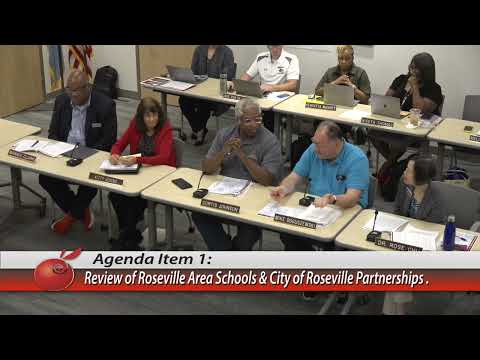
At a joint Roseville City Council and Roseville Area Schools session on Aug. 20, district and city leaders outlined updated emergency protocols, named two school resource officers serving the district, and described expanded violence-prevention and de-escalation training planned for this fall.
Roseville city and school leaders on Tuesday reviewed the district’s layered approach to safety, describing updated response protocols, the roles of school resource officers and an expanding slate of violence-prevention trainings.
Melissa Sonic, identified in the meeting as an assistant (now associate) superintendent, said the District Safety and Security team coordinates building emergency response teams, a district crisis consultation team and school-level plans. “The purpose of the district Safety and Security team is to keep our students safe and secure and to create alignment and support for site-based school safety,” Sonic said.
Sonic described revised Standard Response Protocols that distinguish “hold,” “secure,” “lockdown,” “evacuate” and “shelter,” and she said schools will run crisis response and de-escalation trainings this fall delivered by the district’s student-services team.
Officials named two school resource officers (SROs) now assigned districtwide: Officer Kevin Johnson at the middle school (Rams) and Officer Abdi Wami at the high school (Raz). Presenters said SROs’ duties include crisis response, threat assessments, mentoring and classroom engagement, and connecting families to city and county social supports.
The discussion emphasized a preventive, relationship-based SRO model rather than a solely enforcement role. District presenters said SROs participate in mentoring programs, support the school food shelf, provide welfare checks and coordinate with administrators to reduce interruptions to instruction.
The meeting also addressed communications after incidents. Participants said a recent high-school incident and an incident at a shopping center revealed the need for fully aligned messaging between the district and police so the media does not misinterpret differing phrasing as disagreement. Officials urged coordinated public communications and more proactive storytelling about collaborative successes.
Why it matters: District leaders said the combined approach—updated response protocols, SROs integrated into school life, and violence-prevention training—aims to reduce risk and support students’ mental-health needs while limiting classroom disruption. The district noted that some services rely on partnerships with the Roseville Police Department, Ramsey County and local nonprofits.
Next steps: Presenters said the district will continue crisis-response and de-escalation training rollout this fall and maintain regular coordination with city public-safety partners. No formal policy vote occurred at the session; the meeting focused on updates and operational alignment.