Get Full Government Meeting Transcripts, Videos, & Alerts Forever!
Get email alerts on the Fiscal Policy topic
No spam. Unsubscribe anytime.
Jackson City Council adopts fiscal-impact statement to flag multi-year costs
Summary
The council adopted a fiscal-impact statement requiring departments to document current- and future-year costs, hiring needs and funding sources for new, unfunded items, multi-year contracts and ordinances with programmatic effects. The motion passed after discussion of scope and exemptions.
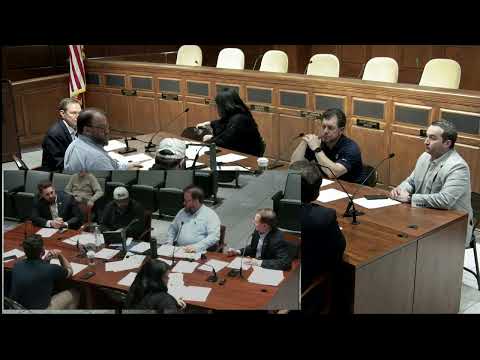
Jackson City — The Jackson City Council voted to adopt a fiscal-impact statement intended to capture the near-term and multi-year budget effects of new contracts, programs and ordinance changes.
Ron, who presented the form to the council, said he “had drafted … essentially what I would always used to call at the state level a fiscal note,” and described the form’s purpose: departments would estimate the fiscal-year and subsequent-year impacts, list any required new hires and state the funding source (for example, grants or general fund). The council debated which items should require completion of the form and whether items already funded in the current budget—particularly capital items—should be exempt.
Council discussion centered on practical examples. Members said the form would be most useful for new or modified contracts that create ongoing obligations, new programs that add recurring costs, and ordinances with programmatic elements that could commit the city to future spending. One councilor noted that routine, already-budgeted capital projects should generally be excluded because the spending was previously approved by the council.
Dave moved the motion to adopt the fiscal-impact statement “for unfunded new items, contracts with more than one year’s worth of costs or ordinances with programmatic impact,” and a colleague seconded the motion. After brief clarification of scope, the motion carried by voice vote; the transcript records the motion as approved without a roll-call tally.
Staff will distribute the form to department heads and apply the new rubric when departments submit capital requests and contract approvals. The council asked staff to work with department heads to refine the guidance about which items must complete the form and to return with any recommended wording changes if necessary.
The action is aimed at ensuring greater visibility into multi-year fiscal commitments before council approval rather than attempting to quantify consequences only after amendments or contract changes are underway.