Get Full Government Meeting Transcripts, Videos, & Alerts Forever!
Get email alerts on the Housing Policy topic
No spam. Unsubscribe anytime.
Council refers proposed changes to Chelsea's inclusionary zoning to subcommittee after weeks of debate
Summary
Councilors debated proposed changes that would limit inclusionary requirements to projects of 100+ units, reduce affordable share to 10%, set incomes at 80% AMI, and reduce fee-in-lieu to $100,000; after extended debate about gentrification, tax impacts, and housing goals, the council referred the petition text to the subcommittee on conference for more study.
The Chelsea City Council on March 23 received a substantial communication proposing four revisions to the city's 2017 inclusionary zoning policy and referred the text to the council's subcommittee on conference for further review and public discussion.
The package of proposed changes would: (1) apply inclusionary zoning only to projects of 100 units or more (the current threshold is 10 units); (2) set the affordable unit requirement at 10% (down from the city's existing mix of 30%, 50% and 80% AMI bands); (3) require affordable units to serve households at 80% AMI or below; and (4) lower the fee-in-lieu to $100,000 (the existing fee cited in the communication was $400,000).
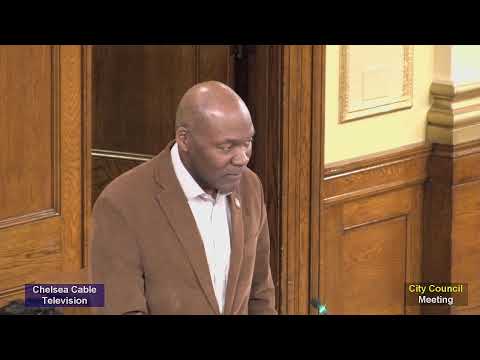
Councilors expressed divergent views across a lengthy floor debate about whether the proposed changes would meaningfully increase new development while protecting existing residents. Councilor Hines cautioned about possible displacement and gentrification, asking, "Where's 50 units here, 20 units there and there's no need to meet inclusionary zoning requirements — what do we do then?" Councilor Recupero raised the revenue trade-offs, noting that affordable housing often reduces tax receipts compared with market-rate development and asking who the units would actually be affordable for.
Other councilors urged careful study rather than hasty change. Councilor Taylor recommended a subcommittee review before forwarding any text to the Planning Board so the administration, planning staff and councilors could align on numbers and guardrails. Councilor Teshe argued the item was a zoning matter and belonged with the planning, development and transportation committee; the body rejected that referral in favor of the subcommittee on conference.
Councilors also noted gaps between policy design and practice: the city had never received a fee-in-lieu payment under the $400,000 figure since 2017, and some councilors said lowering the fee could unlock funds and small-developer projects. Others warned that lowering threshold and percentage may benefit developers more than existing residents unless combined with targeted outreach and lottery policies that prioritize Chelsea households.
What happens next: The council president said she will work with the city manager to schedule the subcommittee on conference meeting as soon as possible. The subcommittee will consider technical details, hear planning staff, developers and community testimony, and make recommendations before any referral to the Planning Board or formal zoning petition is filed.