Get Full Government Meeting Transcripts, Videos, & Alerts Forever!
Get email alerts on the Referendum topic
No spam. Unsubscribe anytime.
East Troy administrators urge voters to approve $4M operational referendum as budget gap remains
Summary
District administrators urged voters to back an operational referendum on April 7, 2026, saying recent cost savings (including a 0% insurance renewal) help but do not eliminate a projected structural deficit of roughly $4.0–4.3 million; administrators recommended forming a public finance subcommittee to increase transparency and fiscal oversight.
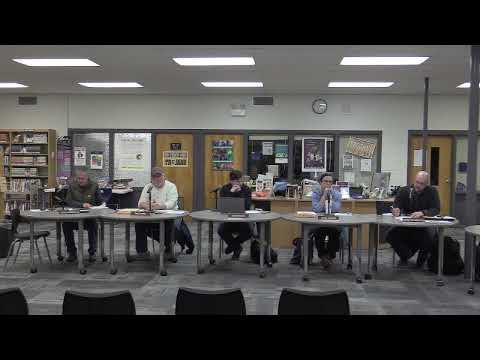
The East Troy Community School District’s administration used the board meeting on April 6 to make a final appeal to voters ahead of the April 7 election, saying the operational referendum is needed to protect recent gains in student programming and staffing.
"Without a successful referendum, there's a great impact," the district administrator said, urging residents to read the frequently asked questions (FAQs) and vote. Administrators stressed that the district has maintained strategic priorities — learner achievement, healthy organizational culture, community engagement, and fiduciary stewardship — and said the FAQs summarize how referendum proceeds would be used and why positive variances have existed in prior years.
Officials emphasized that the recently announced 0% medical renewal helps the district’s outlook but does not close the larger structural deficit. Early projections cited in the meeting showed a structural deficit of about $4.3 million; with the insurance improvement the administrator said that projection falls nearer to $4.0 million but still leaves a material gap.
To provide more public oversight and clearer variance reporting, the administration proposed forming a public finance subcommittee that would review budget development, variance analyses and capital-debt expirations and report back to the board. "The finance subcommittee would be open to the public," the administrator said, describing it as a funnel that would allow other subcommittees to surface financial impacts to stakeholders.
Board members also read the official election notice listing April 7 polling places and the three-year term dates. The board did not take additional budget action at the meeting; it moved into an executive session to consider capital project bids and personnel matters.