Get Full Government Meeting Transcripts, Videos, & Alerts Forever!
Get email alerts on the Education Assessment topic
No spam. Unsubscribe anytime.
Participants say standard tests fail to capture skills emphasized by project‑based learning
Summary
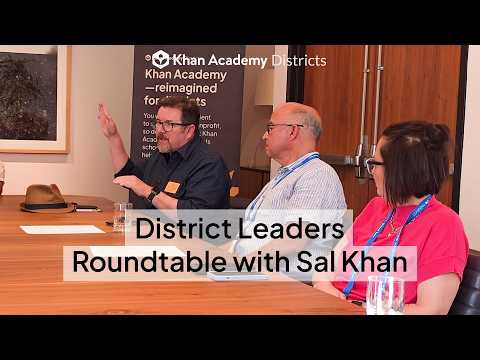
Participants at a meeting on education policy said current standardized assessments do not measure skills such as resilience and collaboration developed outside academic classrooms and urged policy and partnership changes — including outreach to legislators and partners like Khan Academy — to better align testing with workforce needs.
Participants at a meeting on education policy argued that widely used standardized tests do not adequately measure skills developed through project‑based learning and extracurricular activities, and suggested legislative and partnership strategies to change that dynamic.
Meeting participants said the problem is rooted in the policy environment and suggested engaging both legislators and public opinion to shift expectations about assessment and classroom practice. One participant asked, “Could Khan Academy partner with an accent, and a Cali, and a coach, and an (indistinct) and try to shift and find the legislators that were willing to put forward these things.”
The discussion repeatedly rejected the idea that ed‑tech companies want to replace teachers. “We don't want to plug kids in and have teachers sit and scroll their phone,” a participant said, adding that that perception is a straw‑man concern that needs to be dispelled if reformers are to build support for changes in testing and classroom models.
Speakers outlined specific policy aims discussed in the conversation: to “break our addiction to ADA,” enable multi‑age learning, and develop assessments that measure skills business leaders say they need. Participants did not specify the precise legislative language or cite a particular statute in the excerpted discussion; the transcript uses the acronym “ADA” but does not define it in this segment.
Panelists pointed to project‑based learning (PBL) as an example of an instructional model that cultivates skills not well captured by conventional tests. “We have a school in our district, they adopted PBL. I'm a fan,” one participant said, while another asked, “Well, why aren't they growing on their scores?” The group suggested that the tests being given may not measure the valid skills schools are trying to develop.
Speakers tied those concerns to the idea of a learner profile or portrait of a graduate — a tool for describing desired competencies such as resilience and collaboration — and observed that many of those competencies are built in settings outside the classroom, including athletics and musical theater. “Where those skills are built around a baseball field or a soccer field, they're not happening in academic — or musical theater,” a participant said.
The conversation closed with agreement on the measurement challenge. A participant identified in the transcript as Jeff affirmed the point: “No, for sure.” The excerpt contains only discussion and examples; no formal motion, vote, or definitive legislative language was proposed in this portion of the meeting.
The participants left the issue framed as both a technical assessment challenge and a political one: changing tests and classroom models depends on clearer public messaging, partnerships with education providers and intermediaries, and willingness among legislators to consider new accountability approaches.