Get Full Government Meeting Transcripts, Videos, & Alerts Forever!
Get email alerts on the Education Bullying Reporting topic
No spam. Unsubscribe anytime.
Committee approves amended HB 14 to change school bullying data reporting; debate centers on disaggregation and definitions
Summary
The Education, Energy, and the Environment Committee advanced House Bill 14 after adopting a Brooks amendment that incorporates parts of Senator Washington’s language on reporting bullying, harassment and intimidation incidents motivated by specified personal characteristics; members disagreed over disaggregation methods and timelines but the amended bill was reported out of committee.
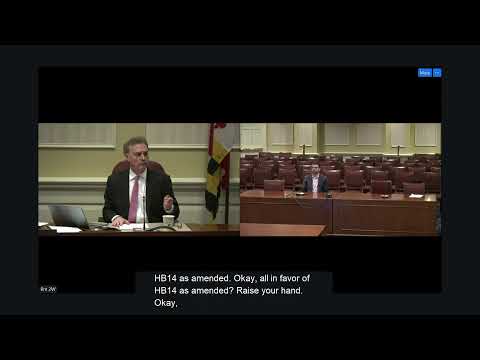
The Education, Energy, and the Environment Committee on May 14 voted to advance House Bill 14 with an amendment that narrows and clarifies how local school systems must report bullying, harassment and intimidation incidents.
The bill, as amended, requires local school systems to include in annual reports to the State Board of Education incidents that, after a thorough and impartial investigation, were determined to be motivated in whole or in substantial part by specified personal characteristics. Senator Brooks moved the amendment incorporating selected language from Senator Washington to replace the phrasing “of that group” with “with those personal characteristics.” The amendment passed in committee and HB 14 was reported out as amended.
Why it matters: The bill changes what data schools must collect and how that information is published, with the committee emphasizing the need for precise definitions and a usable reporting form so state agencies can analyze disparities over time. Sponsors and advocates argued better‑structured data will enable the State Board and MSDE to track trends and target supports.
Discussion and points of contention: Committee members, including Senator Washington and Senator Brooks, disagreed about the technical difficulty of disaggregating data and about whether some statistical calculations in earlier drafts would produce usable results. Advocates, the Maryland Center for School Safety and the Attorney General's office reviewed draft language and flagged parts that could make the data harder to interpret; the sponsor’s staff (Dan Alford) said those stakeholders had helped shape the compromise amendment. The committee explicitly left the door open for floor amendments to refine reporting deadlines, disaggregation details and form specifications.
Procedure and next steps: With the Brooks amendment adopted, the committee voted to pass HB 14 as amended (the final committee vote recorded a no from Senator Washington). The bill will go to the Senate floor for further consideration; sponsors signaled they expect continued drafting and potential floor amendments before final enactment.
Quotes: “We collect all of this information and we want to be able to disaggregate, take it apart,” Senator Washington said during debate, arguing for longitudinal tracking. Dan Alford, Delegate Foley’s chief of staff, said advocates and the Attorney General’s office agreed some house‑drafted calculations were confusing and that Brooks’ amendment restored clarity in several places.
What comes next: The committee explicitly preserved opportunities to refine implementation language on the record and indicated MSDE will be responsible for operational reporting forms and timelines. The bill was reported out of committee and will proceed to further floor work.