Get Full Government Meeting Transcripts, Videos, & Alerts Forever!
Get email alerts on the Route 114 Project topic
No spam. Unsubscribe anytime.
State consultants present Route 114 market study, identify $1M–$8M funding gap depending on AMI
Summary
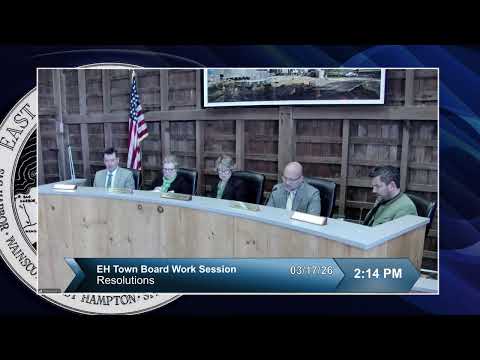
Empire State Development and consultant BJH briefed the East Hampton Town Board on a Route 114 market and feasibility update. The study finds a large mismatch between local incomes and housing costs, estimates development costs of $15M–$24.5M for a 44–50‑unit project, and shows a funding gap that shrinks if a pending $6M community housing fund award is received.
Brandon Gimpleman, program manager with the Long Island Office of Empire State Development, and consultants from BJH presented an updated market assessment and financial feasibility analysis for a proposed affordable housing development at 776–780 Route 114.
The consultants said the study area uses 21 census tracts covering East Hampton and parts of eastern Southampton, and that year‑round population and housing patterns differ markedly from seasonal patterns. Edward Lamson of BJH said the study area’s median home values reported by the U.S. Census are roughly $1 million, though recent market listings show averages closer to $2.4 million, and that household income in the area (about $135,000) leaves a wide affordability gap for workers and middle‑income households.
BJH’s financial analysis examined three developer proposals for the Route 114 site and produced development cost estimates between $15 million and $24.5 million for projects of roughly 44–50 units (costs per unit about $300,000–$500,000). The consultants reported approximately $7.84 million in committed funding and identified an additional pending $6 million from a community housing fund. Depending on assumed AMI targets and unit mixes, the model showed a remaining funding gap roughly ranging from about $1 million to more than $8 million; with the pending $6 million, gaps narrow to approximately $1M–$4M.
Board members asked consultants to model a 130% AMI scenario (the board’s stated target for Route 114), and to provide more detail on seasonality, the share of second‑home ownership, and how short‑term rental dynamics affect demand. Arthur Samuel of BJH said his team would supply additional breakdowns and noted the draft and supporting documents are posted on the town website for detailed review.
The board did not take any formal action at the presentation; members said they would review the materials and coordinate next steps with the Housing Authority and the developer team.
The study materials and the consultants’ interim report will be posted to the Town’s project page and incorporated into future financing discussions as the owner’s representative and developer refine budgets and funding sources.