Get Full Government Meeting Transcripts, Videos, & Alerts Forever!
Get email alerts on the Housing topic
No spam. Unsubscribe anytime.
Perry City council hears developers and residents on three low‑income housing tax‑credit proposals; decision deferred to Monday
Summary
Council held an informational discussion about three competing low‑income housing tax‑credit proposals. Developers described Iowa Finance Authority scoring and community‑cap limits while nearby business owners and residents raised concerns about noise, zoning and school impacts. Council did not vote on any project and will consider action at its next meeting on Monday.
PERRY — The Perry City Council held an informational discussion on three competing proposals to apply for Low‑Income Housing Tax Credits, hearing developers explain state scoring rules and residents voice concerns about location, noise and impacts on schools. The council opened the discussion by roll call and agreed to receive brief developer presentations; it did not take a final vote and said it will address the proposals at its next meeting on Monday.
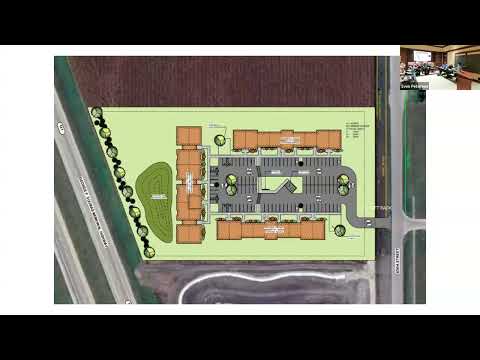
City staff member Molly told council she had circulated rental‑rate breakdowns and site layouts for all three applicants and described the session as informational, not a public hearing. “If the council would like to request any additional information other than what was sent, now would be the time to ask,” Molly said, asking members to identify any data they wanted before Monday’s meeting.
Developers and their representatives described how the Iowa Finance Authority’s Qualified Allocation Plan (QAP) governs awards and caps the number of tax‑credit allocations a city or county can receive. “A city in a rural county shall receive no more than one tax credit award,” Tim Marorrow of CT Development read from the QAP, and he noted that, in non‑rural counties such as Dallas County, a city can receive up to two awards while the county has a separate cap. Marorrow said roughly a dozen 9% awards are available statewide in a typical year and that it would be unlikely for all three Perry applicants to receive awards.
Residents and nearby business owners urged caution. Brett, who runs an auto body shop adjacent to one proposed site, told council he opposed locating apartments next to his business because of late‑night noise and potential recurring complaints. “Adjacent to my property is the one that I’m concerned… I don’t feel that we should have so—” he said, urging council to weigh business impacts when evaluating that West Third/Center Street location.
Sherry Welch, a downtown business owner joining by Zoom, said she opposed the Center Street/West Third site and questioned whether Perry needs more low‑income units now. “I do not approve of this location for the low‑income housing,” she said, arguing the city should prioritize middle‑ and higher‑income housing to support downtown businesses.
Several residents also raised questions about broader local impacts. One speaker who identified himself as M. Parish questioned whether the city’s 13‑year comprehensive plan and a four‑year housing assessment reflect current needs, compared the property tax yield of commercial parcels to residential development, and warned of potential effects on school funding and performance if demographic mixes change.
Developers said they will commission market studies and underwriting before filing applications and stressed checks that agencies and investors apply to avoid projects that are unlikely to lease. “We’re all spending $8,000 to $12,000 to order a market study that’s going to put our project under a microscope,” Jerry Floyd of Front Horse Development said, noting that finance authorities rely on third‑party market analyses to determine need and underwriting.
Developers also addressed local economic benefits and property management. A representative who identified herself as Kristen Gran, senior vice president and general counsel for the presenting firm, said the team aims to use local contractors and to retain long‑term ownership and onsite management. “You can expect us to be here for a long time and be a part of your community,” she said, adding that a recent project used about 70% Iowa contractors and roughly 60% contractors from the host county.
Council members and staff confirmed the process and next steps: developers may present brief summaries and answer questions, staff will provide any additional materials requested, and the council will make a formal decision at the upcoming Monday meeting. The session closed without a vote on any of the proposed projects.
Actions recorded during the session were procedural: the council approved the meeting agenda and voted to open discussion of the LIHTC proposals. A formal motion or vote on any rezoning, site plan or application was not taken at this meeting; those would come at a subsequent meeting if the council places items on a later agenda.