Get Full Government Meeting Transcripts, Videos, & Alerts Forever!
Get email alerts on the School Nutrition topic
No spam. Unsubscribe anytime.
Farmers, school nutrition officials tell House panel eliminating Michigan's 10 Cents a Meal hurt local producers and students
Summary
Farmers, food-service directors and state education officials told the House Appropriations Subcommittee that cuts to the 10 Cents a Meal program reduced purchases of Michigan-grown produce, disrupted local supply chains and weakened school nutrition and education efforts; presenters urged lawmakers to restore funding.
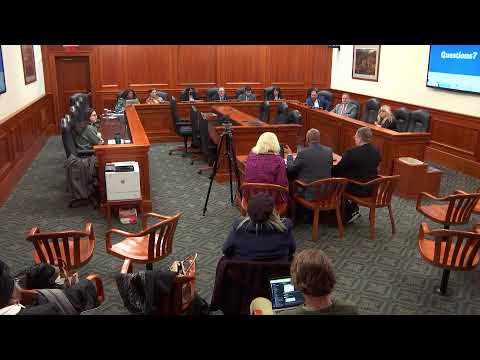
LANSING ' Farmers, food-service directors and Michigan Department of Education officials told the House Appropriations Subcommittee on School Aid and the Department of Education that eliminating the 10 Cents a Meal program disrupted local food purchasing, weakened school meal quality and cost Michigan farmers sales.
At a committee hearing, Rebecca Park, legislative counsel for the Michigan Farm Bureau, framed the program as farmer-driven and said the Farm Bureau's members supported the program from its pilot stage. "When the 10 Cents a Meal was started as a pilot program back in 2016... we have been supportive of this notion," Park said.
The program reimbursed participating child-nutrition sponsors 10 cents per eligible meal to encourage purchase of Michigan-grown produce. Farmers who testified said that state support was crucial to schools' willingness to buy local. "10 Cents a Meal gave the schools the incentive to ... purchase locally grown food versus the distributor food," said Jim Bardenhagen of Bardenhagen Farms, who described his co-op's sales to schools declining sharply after the state dropped the reimbursement.
Diane Golzynski, deputy superintendent for business, health and library services at the Michigan Department of Education, told the committee the program reached hundreds of sites and tens or hundreds of thousands of children. "This nationally recognized one-of-a-kind program significantly increased the amount of Michigan grown fruits, vegetables, and dried beans in meals served to our children," Golzynski said, adding that in 2025 "251 grantees served more than 600,000 children across 64 of our 83 counties." She also told lawmakers that 307 applications were pending when the program was eliminated.
Dan Gorman, a food-service director who spoke for Montague and North Muskegon area schools, gave a local example of economic and educational effects: his district spent about $70,000 with local farmers last school year, and he said coordinated purchasing across his county produced more than $750,000 in economic activity. "What the state invested in this program comes back multiplied," Gorman said, describing investments in processing capacity that enabled schools to use locally produced frozen potatoes and other items.
Other presenters representing food hubs, processors and Michigan State University's Center for Regional Food Systems described broader supply-chain benefits: companies said the program had helped develop processing, packaging and distribution channels that direct Michigan-grown produce into school meals and other institutional settings. Several presenters said that without the state incentive, local purchases decline and lower-cost surplus or donated items often replace locally farmed products.
The committee did not take a vote on funding at the hearing; members thanked witnesses and said they would continue to examine the program and its budget implications. Chair Kelly closed the panel after testimony and moved to the next agenda item.
The subcommittee received documentation and a map of impacted students from presenters and heard multiple requests to reinstate or fund the program again to stabilize relationships and supply chains between schools and Michigan producers.